
Hibbertia spicata
Hibbertia spicata F.Muell.
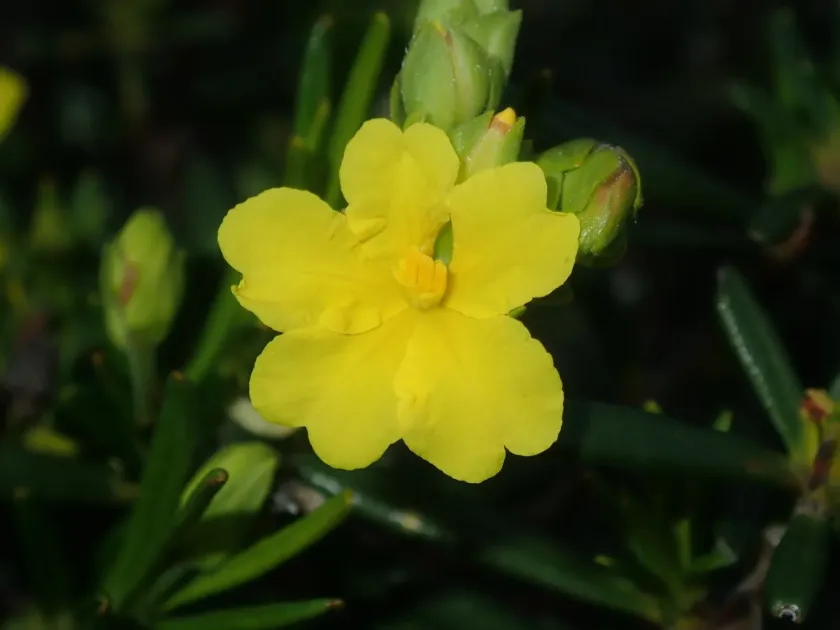
Description
Growing requirements
Hibbertia spicata is a distinguished member of the Dilleniaceae family, native to the Western Australian region. This evergreen shrub is highly valued for its resilient nature and unique floral structure, often found in heathlands and sandy plains.
The plant thrives in well-draining, nutrient-poor sandy soils. In an agronomic context, it is crucial to avoid heavy clay soils that retain moisture, as the roots are highly susceptible to rot under anaerobic conditions.
Regarding climate, this species prefers full sun exposure to promote healthy foliage development and prolific flowering. It exhibits significant tolerance to arid conditions once established, but supplemental irrigation is necessary during the initial stages of growth.
Soil management for this culture involves maintaining low phosphorus levels. Many Australian natives, including Hibbertia, have evolved to exist in soils with extremely low phosphorus availability; therefore, standard fertilizers should be used with extreme caution.
The overall management strategy should prioritize minimal disturbance to the root system and the application of organic mulch, which helps mimic the natural forest floor conditions and preserves soil moisture.
Main diseases and pests
Root rot caused by Phytophthora species is the most significant threat to Hibbertia spicata, particularly when drainage is compromised or in overly humid environments.
Insect pests such as scale insects and spider mites are common in greenhouses or sheltered environments, where they thrive in warm, stagnant air conditions.
Fungal leaf spot diseases can occur during prolonged periods of wet weather, necessitating the use of systemic fungicides and improved spacing between individual plants.
Soil-borne nematodes can weaken the plant by attacking the root system, which underscores the importance of starting with sterilized or high-quality commercial potting mixes.
Regular monitoring for symptoms of stress, such as yellowing leaves or wilting, is essential for early intervention and effective pest and disease control.