
Hibbertia cuneiformis
Hibbertia cuneiformis (Labill.) Sm.
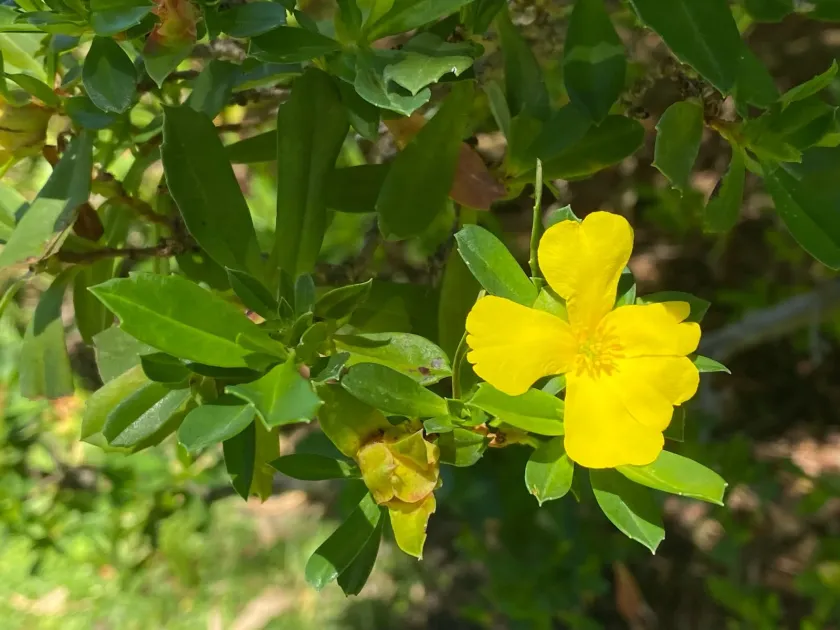
Description
Sowing dates
The propagation of Hibbertia cuneiformis in agricultural nurseries is primarily performed through vegetative cuttings. The best success rate is achieved by taking semi-hardwood cuttings during the transition from late spring to early summer.
Cuttings should be placed in a free-draining medium, such as a mix of peat moss and coarse perlite or sand. Keeping the humidity high while ensuring good air circulation around the foliage is critical for root development.
Seeds can also be used, although they often require specific pre-treatments, such as smoke treatment or cold stratification, to break dormancy. Success rates from seed are generally lower compared to vegetative methods.
Seedlings require a protected environment for the first few months of growth. They should be pricked out into individual pots once they have established several sets of true leaves, using a low-phosphorus potting mix.
Acclimatization of young plants to outdoor conditions should be gradual. Moving them to a greenhouse or a shaded area before full exposure to the sun helps prevent transplant shock and leaf burn.
Growing requirements
Belonging to the Dilleniaceae family, Hibbertia cuneiformis is native to the coastal regions of Western Australia. It is highly adapted to sandy, well-draining soils that are typically low in nutrients.
The plant thrives in full sun exposure. While it is quite hardy, it appreciates some protection from harsh, dry winds in summer, which can cause dehydration of the leaves and woody stems.
Watering requirements are moderate; the plant is drought-tolerant once established but performs better with regular irrigation during the peak growing season. It is vital to avoid waterlogging the roots.
Soil pH should ideally be slightly acidic to neutral. In commercial setups, it is important to avoid fertilizers high in phosphorus, as this species is sensitive to standard fertilizers designed for other crops.
The climate requirements reflect its native Mediterranean environment, meaning it prefers mild, frost-free winters and warm, dry summers for optimal health and flowering performance.
Yield
The primary economic role of this species is in the ornamental horticulture industry. It is sought after for its evergreen foliage and bright yellow, long-lasting flowers that appear throughout the year.
Yield, in this agricultural context, is defined by the quality and uniformity of potted shrubs produced for retail. A dense habit and healthy root system are the key quality indicators for marketability.
Hibbertia cuneiformis is an excellent choice for xeriscaping and sustainable landscaping, as it requires minimal maintenance once established and survives on lower water inputs than many traditional garden plants.
The plant is also valued for its versatility in garden design, functioning well as a ground cover, a low hedge, or a focal point in rock gardens. Its rapid recovery from pruning makes it easy to maintain in formal shapes.
Beyond aesthetics, the plant provides significant ecological value by attracting native pollinators, which enhances the overall biodiversity of the agricultural or garden landscape where it is planted.
Main diseases and pests
The most significant threat to the health of the plant is root rot caused by Phytophthora species. This disease is almost exclusively triggered by poor drainage and excessive soil moisture during warm weather.
Pests such as scale insects and mealybugs can infest the stems and undersides of leaves. These pests are usually managed through manual removal or the application of horticultural oils if the infestation is heavy.
Powdery mildew may occur if the plant is situated in a location with high humidity and stagnant air. Proper spacing and airflow are the most effective preventative measures against this fungal issue.
- Root rot (Phytophthora) from waterlogging.
- Scale insect infestations on young branches.
- Sensitivity to high phosphorus fertilization.
Regular monitoring of the foliage and root zone is recommended. Keeping the base of the plant free of accumulated organic debris also helps reduce the risk of humidity-related pathogens.