
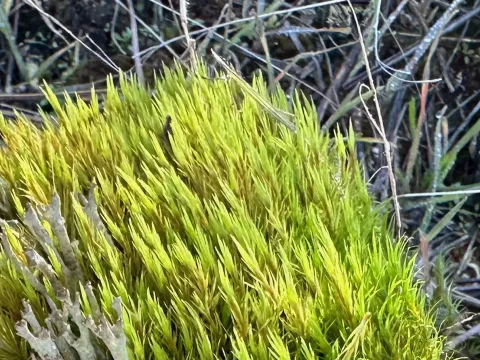
Orthodicranum flagellare
Orthodicranum flagellare
Orthodicranum flagellare, commonly known as whip fork-moss, is a perennial moss species belonging to the family Dicranaceae. While not an agricultural crop, it is a significant component of forest ecosystems, particularly in boreal and temperate forest regions across the Northern Hemisphere.
What the section contains
Orthodicranum flagellare
The species is botanically distinct due to its flagelliform (whip-like) branches, which serve as a primary method for vegetative propagation. These specialized structures are often densely packed, forming characteristic cushions or turfs on the surface of rotting wood, stumps, and occasionally acidic tree bark.
Regarding environmental requirements, this moss thrives in high-humidity habitats with consistent moisture levels. It is typically found in shaded forest areas where the canopy provides protection from direct solar radiation, preventing the desiccation of the delicate moss colonies throughout the growing season.
The substrate preference is a critical factor for the colonization of this species. Orthodicranum flagellare is most frequently associated with decaying logs and woody debris in various stages of decomposition, which act as a reservoir for nutrients and water in the micro-environment.
From an ecological standpoint, the moss contributes to the forest carbon cycle by protecting the surface of decomposing wood and providing micro-habitats for microorganisms and small invertebrates. It is not cultivated for commercial agricultural purposes, though it remains a subject of study in bryology for its role in forest ecosystem resilience.