
Lipocarpha nana
Lipocarpha nana
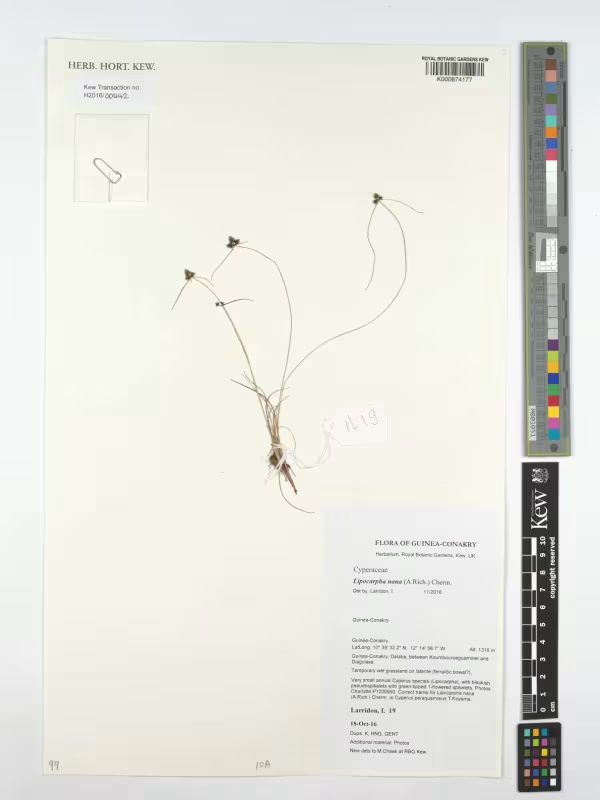
Description
Growing requirements
Lipocarpha nana is a distinctive herbaceous species within the Cyperaceae family, typically found in marshy areas and tropical wetlands. It is well-adapted to habitats where soil saturation is the primary environmental factor influencing plant development.
Botanically, the plant features dense tufts of slender, grass-like leaves and compact inflorescences organized in small heads. This structural arrangement allows it to thrive in nutrient-rich, wet environments where other species might struggle due to lack of oxygen in the root zone.
Cultivation requires conditions that mimic natural wetland ecosystems. This implies constant water availability, high humidity levels, and fertile, organic-rich soil that remains consistently moist throughout the entire growing season.
Agricultural management focuses on hydraulic control and soil aeration management. Even though it is a moisture-loving plant, periodic water exchange is recommended in intensive cultivation to prevent the accumulation of toxic compounds in the substrate.
In practice, Lipocarpha nana is primarily used for ecological landscaping and as a bio-filter in artificial wetland systems. Its ability to absorb nutrients makes it an efficient tool for maintaining water quality in managed environments.
Main diseases and pests
The primary threats include fungal leaf spot and root rot, which are often triggered by improper irrigation cycles or contaminated stagnant water. Proper maintenance of water flow is the key to preventing these diseases.
Common pests include slugs, snails, and certain species of mites that prefer humid microclimates. Integrated pest management, including regular inspection and maintaining healthy plant vigor, is essential for successful growth.