
Louisiana sedge
Carex louisianica
Description
Growing requirements
Louisiana sedge (Carex louisianica) is a perennial wetland plant belonging to the Cyperaceae family. It is native to the southeastern United States, typically found in swampy forests, floodplains, and along the muddy margins of permanent water bodies.
This species is highly specialized for habitats with high moisture content. It thrives in heavy, nutrient-rich soils that retain water well. Its adaptation to anaerobic soil conditions makes it a valuable species for ecological restoration projects in wetland areas.
Regarding climate requirements, Carex louisianica prefers temperate to subtropical environments with sufficient rainfall. It can tolerate full sun provided the root zone remains consistently saturated, but it typically shows more robust growth in partial shade.
Agricultural management for this sedge involves maintaining soil hydrology. Irrigation should be applied if the natural water table drops significantly below the root zone, as the plant is not drought-tolerant.
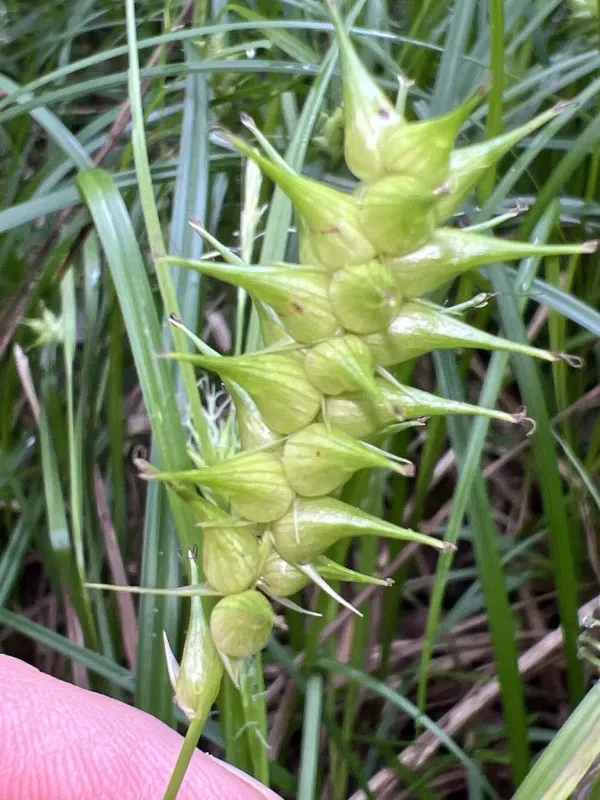
The morphology of the plant includes sturdy culms and bright green, arching leaves. As a rhizomatous plant, it gradually forms dense clumps, which serve as excellent natural soil stabilizers along riparian corridors.
Main diseases and pests
While robust in its native habitat, Carex louisianica can be susceptible to fungal diseases such as leaf blight when grown in stagnant, poorly ventilated conditions. High humidity combined with elevated temperatures often triggers these issues.
Pests are generally not a major concern for this species. However, certain herbivorous insects may occasionally feed on the foliage during peak summer months, though they rarely cause mortality in established colonies.
Prevention is the best strategy for maintaining plant health. Ensuring proper spacing during installation allows for better air circulation, which effectively reduces the risk of moisture-related fungal growth on the foliage.
Monitoring the soil for compaction is also essential, as healthy roots require a balance of moisture and minor aeration. Correcting drainage issues helps prevent root rot in sensitive young specimens.
Given its specialized nature, the main threat to populations is habitat loss or changes in local hydrology. Protecting the natural moisture regime is the most critical factor in mitigating threats to this plant.