
Colocynth
Citrullus colocynthis
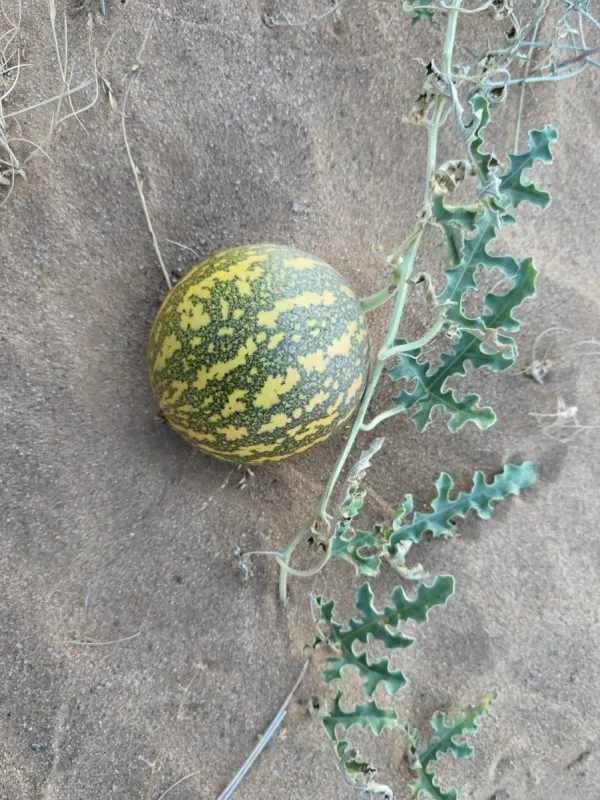
Description
Sowing dates
Colocynth is a desert-adapted plant that requires high soil temperatures for successful germination. Seeds are typically sown during the warmest period of the season to ensure rapid emergence.
Sowing should be performed in well-draining, loose soil to prevent seed rot, which is common in cold or waterlogged conditions during the initial stage.
The planting depth is usually set at 3-5 centimeters, depending on the moisture level of the upper soil layer, providing the embryo with sufficient warmth.
Due to the plant's spreading nature, spacing between seeds or seedlings must be generous to allow for the development of extensive trailing vines.
In non-native or colder regions, Colocynth cannot be sown outdoors and requires protective structures to meet its strict thermal requirements for germination.
Growing requirements
Botanically, Colocynth belongs to the Cucurbitaceae family and acts as a perennial vine, perfectly adapted to survival in the harshest arid and semi-arid climates.
The plant demonstrates extreme drought tolerance by developing a deep taproot that allows it to access moisture reserves far below the surface of the desert sand.
Full sun exposure is a mandatory requirement for Colocynth, as even partial shade significantly slows down its metabolism and reduces the accumulation of useful compounds.
It prefers sandy or gravelly soil profiles that provide excellent aeration and natural drainage, as it is highly susceptible to root decay in heavy, compacted soils.
The plant thrives in regions with very low annual rainfall and does not require conventional irrigation schemes that would be standard for other cultivated crops.
Main diseases and pests
The primary threats to Colocynth crops are various soil-borne pathogens that exploit wet conditions, leading to root and stem rot during periods of high humidity.
Aphids are recognized as significant pests that congregate on young shoots and buds, potentially transmitting viral diseases that can destroy a local population.
Spider mites can become a major issue during peak summer heat, damaging the foliage and reducing the photosynthetic capacity of the plants.
Powdery mildew represents a consistent risk, especially if there are fluctuations in humidity or insufficient air circulation around the spreading foliage.
Management of these threats relies heavily on preventative cultural practices rather than synthetic chemicals to maintain the purity of the medicinal raw materials.
Harvesting
Harvesting is initiated once the fruit exhibits a distinct yellowish, mottled skin color, indicating physiological maturity and high seed development.
The fruits are manually collected with great care to prevent bruising, which could introduce fungal infections into the valuable internal tissues.
After collection, the fruits are processed to separate the seeds from the pulp, as the seeds are the primary component of interest for industrial extraction.
The drying process is crucial and must be conducted in clean, ventilated environments to ensure the stability of the plant's active medicinal compounds.
Proper harvest timing ensures maximum yield, as harvesting too early results in poor seed quality, while late harvesting might lead to desiccation of the plant tissues.