
Desert melon
Citrullus ecirrhosus
Description
Growing requirements
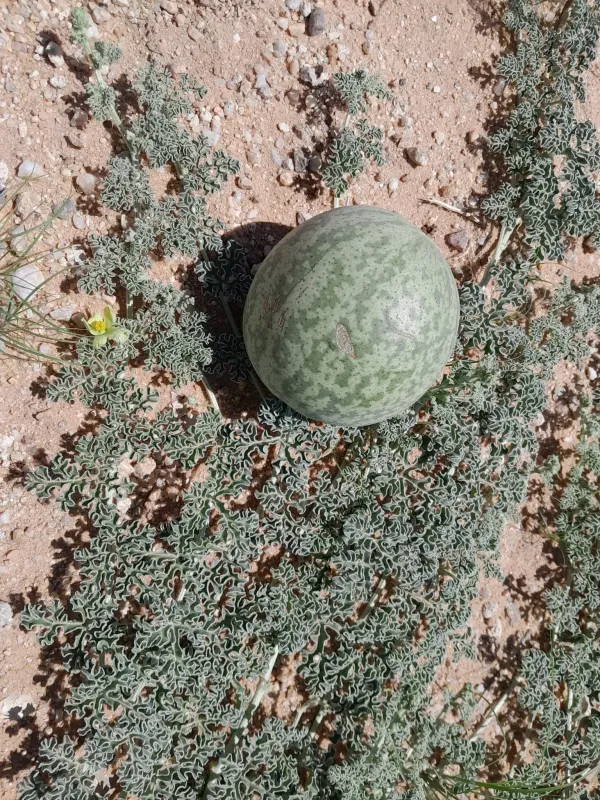
The desert melon (Citrullus ecirrhosus) is a unique member of the Cucurbitaceae family. It is distinctively adapted to the hyper-arid environment of the Namib Desert, where it survives on minimal annual rainfall.
Botanically, this species is characterized by the absence of tendrils, an evolutionary adaptation to its flat, sandy, and treeless habitat. This lack of tendrils distinguishes it clearly from other melon relatives.
The species requires extremely sandy, well-draining soil to thrive. It is highly susceptible to root rot if grown in heavy or poorly drained media, making careful site selection essential for cultivation.
High solar radiation is necessary for the plant's metabolic functions. Unlike common melons, this species thrives in extreme heat and does not show typical signs of leaf scorch under intense desert sun.
Cultivation attempts should prioritize water scarcity management. The irrigation schedule must be strictly limited to prevent excessive moisture, which mimics the natural rainfall patterns of its native range.
Main diseases and pests
Root rot caused by Phytophthora species is the most significant threat to Citrullus ecirrhosus in managed environments. It is almost exclusively caused by poor soil drainage and excess irrigation.
Powdery mildew represents a persistent risk in areas with fluctuating humidity levels. Once infected, the foliage loses its ability to photosynthesize effectively, eventually leading to plant death.
Aphid infestations are a common challenge during the early stages of growth. These pests can transmit viral diseases that are particularly devastating to members of the Cucurbitaceae family.
Root-knot nematodes can severely limit water uptake, causing the plant to wilt even when the soil moisture content is adequate. Sandy soils are highly conducive to nematode proliferation.
Integrated pest management should focus on cultural practices, such as maintaining optimal plant spacing to promote airflow. Chemical treatments must be chosen carefully to avoid phytotoxicity.