
Trichosanthes wallichiana
Trichosanthes wallichiana
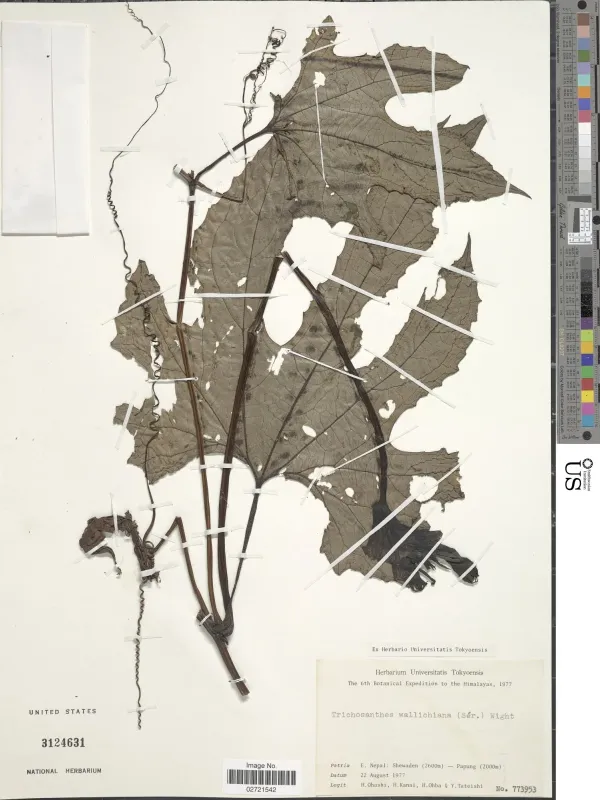
Description
Sowing dates
Trichosanthes wallichiana is a vigorous climbing vine belonging to the Cucurbitaceae family. Sowing is typically carried out in greenhouses or controlled environments during early spring to ensure optimal germination.
Seeds require warm temperatures, ideally between 20°C and 22°C, to break dormancy. Pre-soaking seeds for 24 hours is highly recommended to soften the hard outer seed coat and encourage uniform sprouting.
Seedlings should be transplanted to their final location once the risk of frost has completely passed. The plant grows rapidly and requires a sturdy trellis system for vertical development.
Space the plants approximately 1–2 meters apart to provide adequate ventilation and sunlight, which is crucial for preventing humidity-related issues in the dense canopy of the vine.
Early-stage growth should be monitored to ensure the vine attaches properly to the provided supports, as the plant relies on specialized tendrils to climb effectively during its development phase.
Growing requirements
This species thrives in tropical and subtropical climates. It requires consistent warmth and high relative humidity to maintain healthy vegetative growth and fruit production throughout the season.
Soil should be rich in organic matter, well-draining, and loose to prevent waterlogging. Sandy loam soils amended with compost provide the best environment for root development and nutrient uptake.
Full sun is required for optimal photosynthesis; however, in regions with extremely high solar intensity, partial shading may be necessary to protect the foliage from heat stress and leaf scorch.
Regular irrigation is vital. The plant demands a steady water supply, especially during the flowering and fruit-setting stages, to prevent premature flower drop and ensure the development of high-quality fruits.
Nutrient management involves applying balanced fertilizers throughout the growing season, with an increased focus on phosphorus and potassium once the plant begins its transition to the reproductive stage.
Main diseases and pests
Common pests include spider mites and aphids, which frequently infest plants in dry greenhouse environments, leading to leaf discoloration and weakened overall plant vigor.
Powdery mildew is a significant fungal threat, characterized by a white powdery coating on the leaves. Improved air circulation and moisture control are the primary methods of prevention.
Fusarium wilt and other soil-borne diseases can impact the root system if drainage is poor or if the same site is used for cucurbits repeatedly without proper sanitation.
Leaf-eating beetles can occasionally cause damage to foliage. Monitoring and early intervention with biological controls or targeted insecticides are necessary to maintain plant health.
Crop rotation and strictly removing infected plant material are essential management practices to minimize the buildup of pathogens in the soil and ensure long-term sustainability of the planting site.