
Winged spindle
Euonymus alatus (Thunb.) Siebold
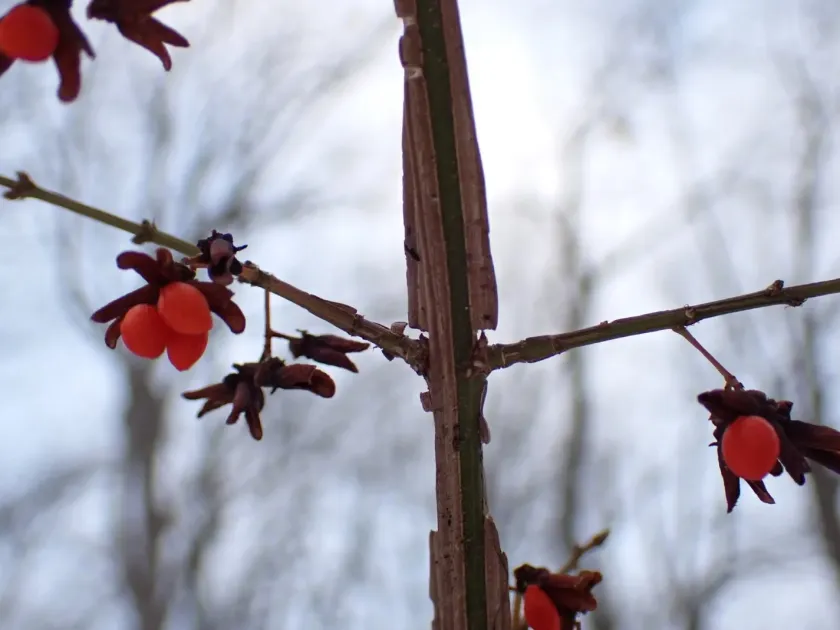
Description
Growing requirements
The winged spindle (Euonymus alatus), also known as the burning bush, belongs to the Celastraceae family. It is native to the woodlands of East Asia, including Japan, Korea, and China, where it acts as a hardy understory shrub.
This shrub requires well-draining, fertile soil to thrive. While it can adapt to various light levels, full sun exposure is essential for maximizing the brilliant fiery-red autumn foliage color and the development of its signature corky bark wings.
In terms of climate requirements, the species is remarkably cold-hardy. It prefers a temperate climate and is capable of surviving harsh winters once established, provided it has protection from heavy, waterlogged soil conditions.
Agrotechnical maintenance involves consistent mulching to maintain soil moisture and cool root temperatures. Pruning is best performed in late winter or early spring to shape the plant and remove any dead or crossing branches to improve air circulation.
In landscape architecture, the winged spindle is valued for its versatility. It serves as a striking focal point, a robust hedge, or an element in shrub borders. Its dramatic seasonal transformation makes it a staple in ornamental horticulture.
Main diseases and pests
Spider mites are a common pest, particularly during hot and dry spells. These pests colonize the underside of the leaves, and their presence can be mitigated by keeping the shrub properly hydrated and occasionally washing the foliage.
Powdery mildew is a primary fungal threat, especially in humid environments with poor airflow. It appears as a white, dusty coating on the leaves and can be controlled using appropriate systemic fungicides.
Scale insects can occasionally infest the stems, causing stunted growth. Manual removal or the application of horticultural oils during the dormant season are standard practices for managing these infestations.
Aphids are typical early-season pests that target new tender growth. While rarely fatal, heavy infestations can cause curling leaves and invite further secondary fungal issues, necessitating timely intervention.
Overall, maintaining plant health through proper spacing and sanitation is the best defense against diseases. Regular monitoring ensures that any pest issues are handled before they impact the shrub's aesthetic value.