
Scleranthus brockiei
Scleranthus brockiei
Description
Growing requirements
Scleranthus brockiei is a resilient perennial herb that belongs to the Caryophyllaceae family. It is native to the subalpine and alpine regions of New Zealand, where it thrives in harsh mountainous conditions.
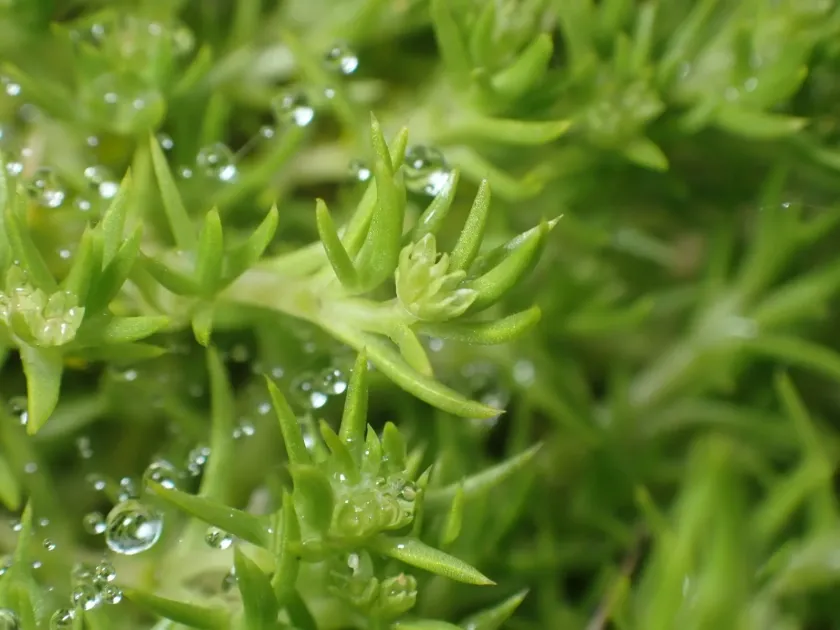
Botanically, the plant is characterized by its cushion-forming growth habit. It develops dense, moss-like mats that are highly efficient at retaining moisture and resisting strong winds typical of high-altitude habitats.
When it comes to environmental requirements, this species demands well-drained, nutrient-poor soil. It is intolerant of heavy, waterlogged conditions, which can quickly lead to root decay and overall plant failure.
Sun exposure is critical for the health of the plant. It prefers full sun to light shade, ensuring that the foliage stays dry and avoids fungal infections that flourish in stagnant, humid environments.
In landscape design, this plant is used as a specialized groundcover. It is perfect for rock gardens, trough gardens, and as a low-maintenance filler between paving stones due to its uniform and compact appearance.
Main diseases and pests
The most significant threat to Scleranthus brockiei is root rot, triggered by poor drainage and excessive moisture retention in the soil profile.
Winter wetness can also be detrimental, particularly when the soil remains saturated for long periods during freeze-thaw cycles, stressing the roots.
Pest pressure is generally low, though slugs and snails may occasionally feed on the dense foliage if the planting area is too humid or poorly ventilated.
Management of these threats involves ensuring high-quality drainage using expanded clay or gravel amendments when preparing the planting bed.
Regular inspection of the cushion's center is recommended to ensure that no dead debris accumulates, as this can harbor pathogens and reduce plant vitality.