
Saponaria pumilio
Saponaria pumilio
Description
Sowing dates
Sowing Saponaria pumilio seeds requires patience, as the species benefits greatly from a cold stratification period. Sowing in late autumn or early winter in seed trays kept in an unheated greenhouse is the most effective method.
The seeds should be sown on the surface of a grit-based substrate and lightly pressed down. Covering them with a thin layer of fine gravel helps maintain humidity while allowing light to reach the seeds.
Germination usually occurs in early spring when temperatures begin to rise. Consistent moisture is crucial during this stage, but the substrate must never become waterlogged to prevent damping off.
Once seedlings have developed their second set of true leaves, they should be carefully pricked out. Handling the root ball with extreme caution is necessary to minimize transplant shock, as this plant dislikes root disturbance.
Plants are ready to be moved to their permanent rock garden location once they are well-established. It is advisable to acclimatize them to outdoor conditions gradually over a week before planting them in the ground.
Growing requirements
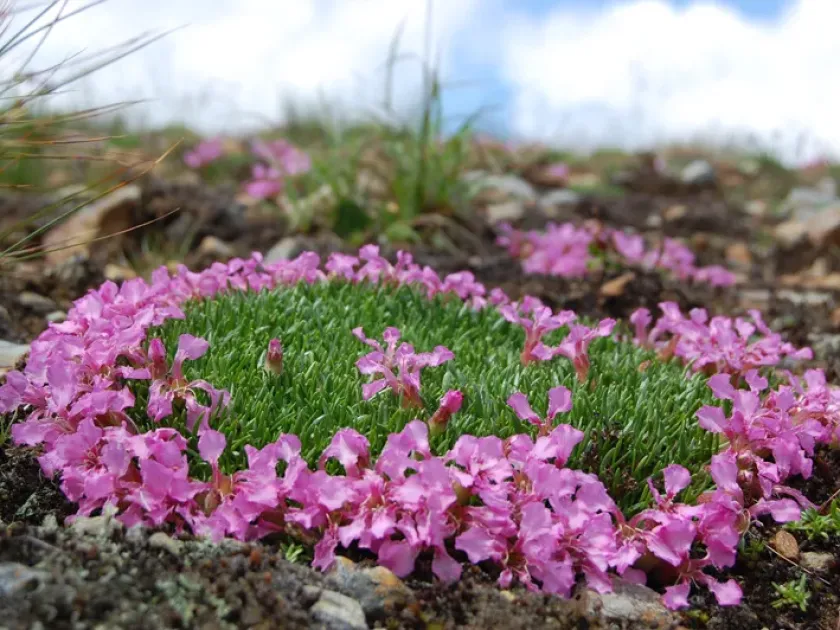
Saponaria pumilio, a member of the Caryophyllaceae family, is a miniature alpine plant native to the high-altitude calcareous regions of the Alps. Its growth habit is naturally low and mat-forming.
The primary requirement for this species is exceptional drainage. In a garden setting, this is best achieved by planting it in a raised bed or a crevice in a rock garden filled with a gritty, stony mix.
Full sun is mandatory for healthy growth. Saponaria pumilio will not tolerate shade, as insufficient light levels result in leggy foliage and a significant reduction in the quantity of its vibrant pink flowers.
The soil pH should ideally be neutral or slightly alkaline. Adding limestone chippings to the planting site mimics its natural limestone habitat and promotes vigorous growth and better flower production.
Watering needs are very low during the summer months. During the winter, the plant requires excellent airflow and protection from prolonged dampness to ensure the central part of the mat does not rot.
Main diseases and pests
Root rot is the most common threat to Saponaria pumilio, usually resulting from poor soil drainage or excessive irrigation. Improving the gravel layer around the crown of the plant is a critical preventative step.
Fungal infections such as powdery mildew can occur if there is inadequate air circulation around the plants. Regular thinning of nearby vegetation helps to maintain a dry and healthy environment.
Slugs and snails are occasional pests that target the succulent-like foliage during damp spring weather. Implementing physical barriers like grit or copper tape around the planting site is a recommended solution.
Aphids might occasionally infest the flower buds during hot, dry spells. If detected, targeted treatment with mild organic insecticidal soap is effective without causing damage to the delicate plant tissues.
Monitoring the plant for yellowing or soft spots in the cushion is vital for early disease detection. Promptly removing any dead or decaying material helps preserve the overall health and longevity of the colony.