
Saponaria olivana
Saponaria olivana
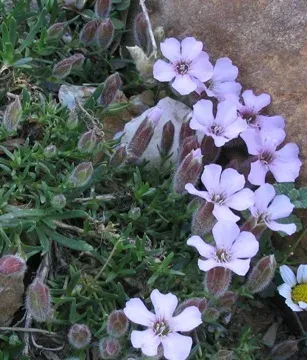
Description
Sowing dates
Sowing of Saponaria olivana is typically performed in early spring, ensuring the soil is sufficiently warmed and free from the threat of late frosts.
Seeds should be sown thinly on the surface of a prepared sandy seedbed and lightly pressed in, as they often require some light for optimal germination.
Division of mature, well-established clumps is a common and reliable method for propagation, yielding plants that establish themselves quickly.
Adequate spacing, generally about 25 centimeters between plants, is necessary to prevent overcrowding and ensure healthy air circulation.
Maintaining consistent moisture during the germination phase is critical, but once established, the plants demonstrate significant drought tolerance.
Growing requirements
Saponaria olivana is a low-growing perennial herb belonging to the Caryophyllaceae family, known for its elegant cushion-like growth habit.
The plant originates from mountainous, rocky regions, which determines its high adaptability to harsh environmental conditions and poor soil quality.
It thrives best in sunny positions with well-drained, gritty substrates, as the species is highly sensitive to excessive moisture near the root collar.
Botanically, it features small, deep-green foliage forming compact mats that are completely covered by charming pink flowers during the peak blooming period.
As a hardy perennial, it requires minimal soil nutrition and is perfectly suited for rock gardens, stone walls, and other xeriscaping applications.
Main diseases and pests
The primary agronomic threat to Saponaria olivana is the presence of stagnant water, which invariably leads to crown and root rot issues.
Fungal pathogens flourish when air circulation is poor, particularly in humid climates or during periods of prolonged summer rainfall.
Powdery mildew can sometimes appear on foliage if plants are stressed by drought or if they are planted too closely together in non-aerated spots.
Gastropod pests, including snails and slugs, are attracted to the succulent foliage and can cause significant aesthetic damage to the dense mats.
Good cultural practices, such as applying a top dressing of fine gravel, act as a barrier and significantly reduce the likelihood of these common ailments.