
Annual knawel
Scleranthus annuus L.
Description
Growing requirements
Annual knawel (Scleranthus annuus L.) is a flowering plant species belonging to the Caryophyllaceae family. It is recognized primarily as a widespread weed that affects various arable crops globally.
Originating in Europe, the plant has successfully expanded its range across Asia and North America. It displays a remarkable ability to colonize disturbed soils, making it a common sight on field margins and unmanaged lands.
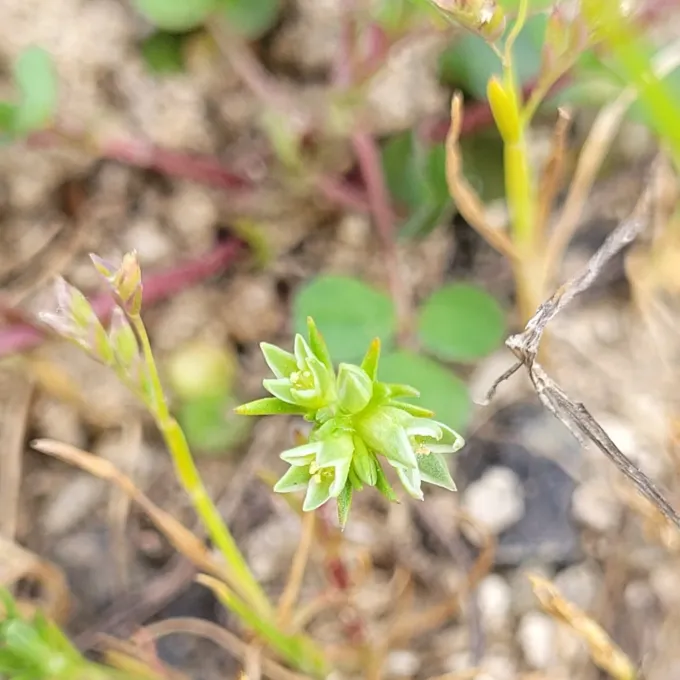
Botanically, it is a low-growing annual herb with a branched stem and small, needle-like leaves. Its appearance is often described as forming dense, cushion-like mats close to the ground, which can compete with young crop seedlings.
The plant thrives in sandy or light-textured, acidic soils. It is considered an indicator of soil acidity, often suggesting that the land would benefit from lime application to optimize the growing environment for crops.
In terms of growth requirements, annual knawel demands high light intensity. It struggles to persist in dense, healthy crop canopies, meaning that good agronomic practices to promote rapid crop closure are the best prevention.
Main diseases and pests
The main threat posed by annual knawel is its high seed production and longevity. A single plant can produce an immense number of seeds that can remain dormant in the soil seed bank for several years.
As a competitor, it consumes limited nutrients and water, which can stunt the development of younger or less vigorous crops. Its presence often leads to reduced yields in both cereals and vegetable production systems.
Control strategies involve both mechanical and chemical interventions. Cultivation is highly effective if performed early in the season before the plant establishes its root system and begins to spread across the field surface.
Chemical control usually relies on specific herbicides. However, because the plant has waxy leaves, proper formulation and timing are essential to ensure adequate penetration and efficacy of the active ingredients.
While annual knawel is not a primary host for major agricultural pests, it can act as a reservoir for certain pathogens. Continuous monitoring and integrated weed management remain the most reliable methods to mitigate its impact.