
Gypsophila acutifolia
Gypsophila acutifolia
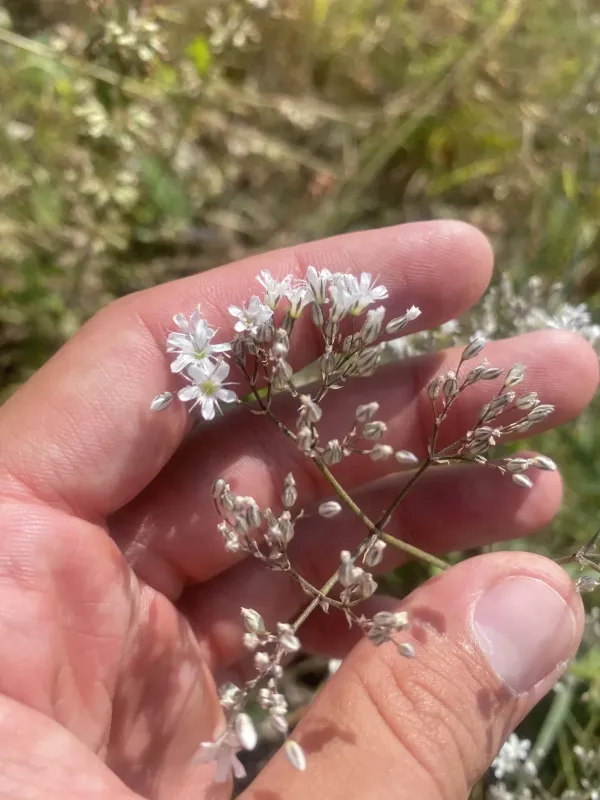
Description
Sowing dates
Sowing Gypsophila acutifolia is typically performed in early spring, once the soil temperatures consistently reach 10–12 degrees Celsius. Proper timing is critical to ensure that seeds have enough moisture for optimal germination.
In regions with milder winters, late autumn seeding is sometimes employed. This method allows the seeds to undergo natural stratification in the soil, often leading to more robust initial growth during the following spring season.
The seeds are small and should be sown at a shallow depth of 1–2 centimeters. Using precise vegetable seed drills helps maintain the recommended seeding rate and ensures uniform spacing across the plantation field.
Optimal row spacing ranges between 45 and 60 centimeters. This provides enough space for both plant development and the mechanical maintenance required to keep the fields free from invasive weed competition.
Post-sowing soil compaction is an essential step to increase soil-to-seed contact. Using a light roller ensures that the seeds are not displaced by wind and remain in an environment conducive to rapid absorption of water.
Growing requirements
Gypsophila acutifolia is a perennial member of the Caryophyllaceae family, known for its deep taproot and high drought tolerance. It thrives best in open, sunny environments where it receives full sunlight throughout the day.
The plant prefers light, well-drained soils, such as sandy loams or silt loams. It is highly sensitive to waterlogged conditions, which can lead to root rot; therefore, selecting a site with good natural drainage is vital for success.
While the plant is hardy and can survive cold winters, its metabolic activity during the growing season benefits from stable, warm temperatures. It is well-suited to the climate of its native range, showing excellent resilience to heat.
Soil pH levels should ideally be neutral or slightly alkaline. In acidic soil conditions, liming may be necessary to adjust the pH, as this plant performs poorly in overly acidic environments.
Effective management includes protecting young plants from competition. Since the initial growth phase is relatively slow, early season weeding is mandatory to allow the plants to establish their root system without resource struggle.
Yield
The economic yield of Gypsophila acutifolia is derived from its roots, which are highly valued for their high saponin content. Harvesting is usually planned for the third or fourth year when the root volume is at its peak.
An established plantation can produce between 2 and 4 metric tons of dried roots per hectare. The exact yield depends heavily on soil fertility, consistent moisture management, and the overall health of the root system.
Applying phosphorus and potassium fertilizers during the active growth phases can significantly boost root biomass. These nutrients are essential for the plant to store energy and develop the secondary metabolites sought by industry.
Supplementary drip irrigation in arid periods can increase yields by up to 20 percent compared to non-irrigated crops. However, irrigation must be managed carefully to ensure the root zone never stays perpetually saturated.
Yield quality is as important as quantity. Laboratory analysis of the saponin concentration is recommended periodically to determine the optimal harvest window for producing high-grade technical raw material.
Main diseases and pests
The primary threat to Gypsophila acutifolia plantations is fungal infections, specifically those affecting the root system. Poor drainage and over-irrigation are common precursors to root rot, which can devastate a field.
In high-density plantings, powdery mildew may manifest on the foliage, especially during humid summer months. Regular ventilation and proper row spacing are the best cultural methods to minimize this risk.
Soil-borne pests like wireworms are significant risks for the taproot. Integrated pest management, including crop rotation and pre-planting soil analysis, is necessary to mitigate the population of these underground pests.
Strict crop rotation guidelines should be followed, avoiding fields where other Caryophyllaceae species were grown recently. This helps break the life cycle of pathogens specific to this plant family.
Preventative maintenance includes keeping the area around the base of the plant free of debris and weeds. This promotes air circulation around the crown, significantly lowering the likelihood of crown and root infections.
Harvesting
Harvesting is performed using specialized deep-plowing equipment capable of extracting the long, sturdy roots without causing excessive breakage. Work is typically carried out in late autumn when the plant is dormant.
Once extracted, the roots are cleaned of dirt, washed, and sorted by size. Rapid processing is required to prevent mold development on the damp root surfaces before they are moved to the drying facility.
The drying process is crucial for product quality. Roots are cut into pieces and dried in temperature-controlled chambers at 40–50 degrees Celsius until the moisture content is low enough for stable long-term storage.
Proper storage is essential to maintain the integrity of the saponins. The product should be kept in a cool, dry, and well-ventilated area, protected from moisture and direct UV light until processing.
The primary industrial use of the root is as a natural foaming agent. It is extensively used in the production of traditional foods, such as halvah, as well as in the manufacture of high-quality soaps and cosmetics.