
Gypsophila briquetiana
Gypsophila briquetiana
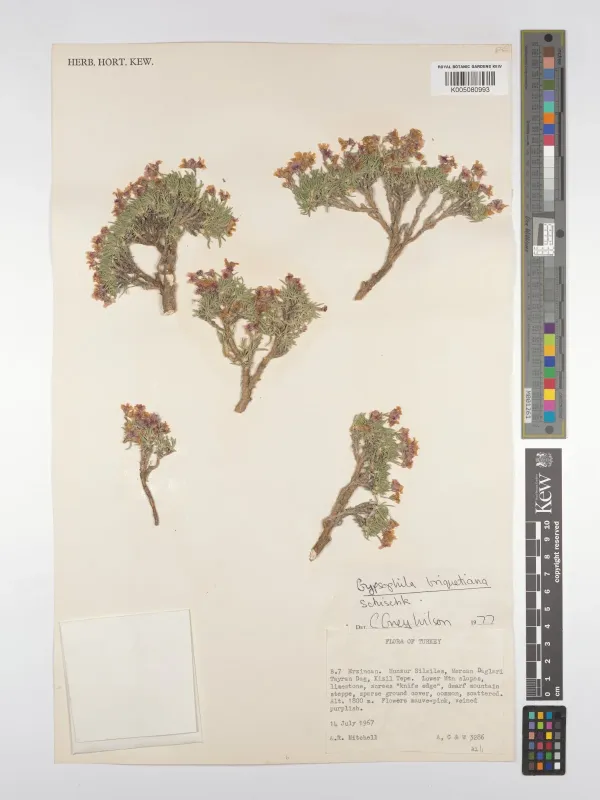
Description
Sowing dates
Sowing Gypsophila briquetiana seeds is best performed in early spring once the soil temperatures consistently reach at least 10-12 degrees Celsius.
Late autumn sowing is also a viable option in many regions, allowing the seeds to undergo natural stratification, which often improves spring germination.
Seeds should be planted at a shallow depth of 0.5–1 centimeter, as their small size requires access to surface light to trigger the germination process.
For indoor seedling production, seeds are started in trays during March, ensuring sufficient artificial light to prevent the development of spindly plants.
The recommended planting density is 50-70 centimeters between rows and 30-40 centimeters between individual plants to ensure proper aeration.
Growing requirements
As a member of the Caryophyllaceae family, Gypsophila briquetiana thrives in full sun, requiring exposure to direct sunlight for the majority of the day.
The crop demands light, well-drained soil with high calcium content and a neutral to slightly alkaline pH to reach its maximum production potential.
Excessive soil moisture is detrimental, so field selection must prioritize areas with excellent drainage to prevent the root rot commonly found in heavy soils.
While the plant exhibits significant drought tolerance, moderate irrigation during the active growing phase is essential for producing high-quality floral stems.
Winter hardiness is high for this species, though mulching the base in regions with severe, snowless winters is advised to protect the plant from freezing.
Main diseases and pests
Fungal pathogens represent the primary threat to Gypsophila briquetiana, particularly when humidity levels remain high and air circulation is restricted.
Gray mold and various stem rots are the most common diseases that can rapidly destroy the plant's structural integrity if left unchecked by proper hygiene.
Poorly drained fields are high-risk zones for soil-borne pathogens, making initial site preparation and drainage installation the most critical disease defense.
Pests like spider mites and certain leaf-chewing insects may cause significant damage during hot and dry weather cycles throughout the growing season.
Integrated pest management, including regular crop scouting and the timely application of approved insecticides, is necessary for maintaining crop health.
Harvesting
Harvesting for commercial use occurs when approximately 70 percent of the flowers have fully opened, ensuring the best visual quality for the market.
Cutting should be performed in the early morning hours to maintain maximum turgor pressure within the stems, which enhances post-harvest longevity.
Utilizing sharp, sanitized cutting tools is mandatory to prevent physical tissue damage and to stop the spread of pathogens between individual plants.
Harvested material must be transported immediately to a cool, shaded sorting facility to avoid heat stress and preserve the flower's freshness.
For dry flower production, the harvested stems should be air-dried upside down in a dark, well-ventilated space to preserve both color and shape.