
Giant pink
Dianthus giganteiformis
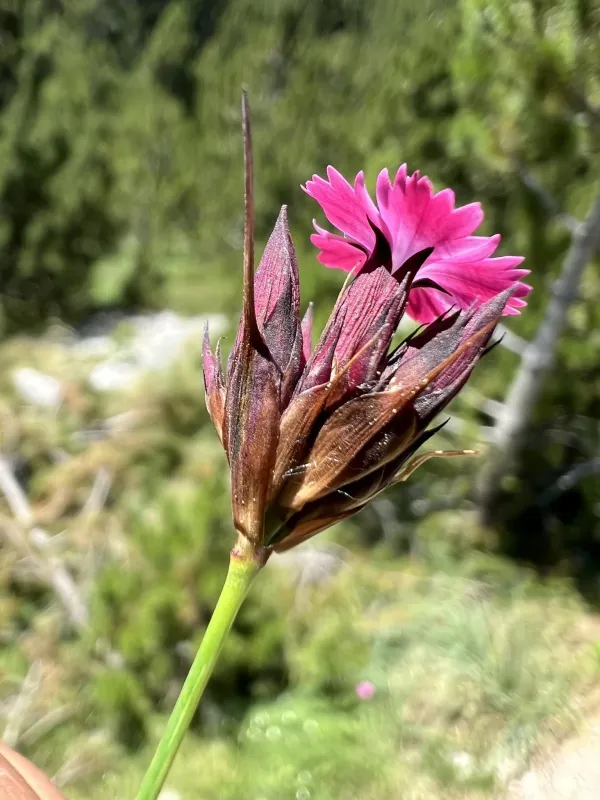
Description
Sowing dates
Sowing seeds of Dianthus giganteiformis in open ground is best performed in the spring, once the soil has warmed up, usually in late April or early May.
To achieve earlier flowering, the crop is often grown from seedlings, starting in indoor trays in March at temperatures between 18 and 20 degrees Celsius.
Seeds should be planted at a shallow depth and covered with a light substrate, as they require oxygen and moderate moisture to germinate successfully.
Seedlings are pricked out in the two-to-three true leaf stage, ensuring they have sufficient space to develop a strong and healthy root system.
Transplanting seedlings to their permanent location is done in May, taking care not to disturb the root ball to minimize the adaptation period.
Growing requirements
The Giant Pink belongs to the Caryophyllaceae family and is a robust, herbaceous perennial plant known for its striking, tall flower stalks.
The crop prefers well-lit areas with direct sunlight, as insufficient light levels cause the stems to become weak and prone to lodging.
The plant has moderate soil requirements, thriving best in light, well-drained, and slightly alkaline loamy soils that provide adequate nutrients.
Excessive soil moisture and waterlogging are detrimental to this species, making proper drainage essential, especially in heavier soil types.
During the active growing season, regular but moderate fertilization with complex mineral fertilizers is recommended to maintain the plant's health and appearance.
Main diseases and pests
The primary threats to this crop include fungal diseases like Fusarium wilt and Alternaria, which are often exacerbated by poor moisture management.
Pests such as spider mites and aphids can attack young shoots and buds during hot, dry weather, requiring timely application of appropriate insecticides.
Disease prevention relies on implementing crop rotation and avoiding overcrowding, which restricts airflow and creates favorable conditions for pathogens.
To combat soil-borne pathogens, it is advised to treat seeds with fungicides and maintain regular cultivation of the topsoil layer around the plants.
If infection symptoms appear, affected parts of the plant must be immediately removed and destroyed to prevent the spread of the disease to healthy specimens.
Harvesting
Flowers should be harvested in the semi-bloom phase, when the bud has developed its color but remains firm, ensuring longevity in a vase.
Cutting tools must be sharp and disinfected to ensure clean cuts, which helps prevent the entry of pathogens into the stems of the flowers.
It is best to cut flower stalks during the early morning hours when the plant's tissues are fully turgid, which maximizes the vase life of the cut flowers.
To extend the freshness of the bouquets, adding specialized flower food or preservatives to the water is highly recommended to inhibit bacterial growth.
At the end of the flowering season, the spent flower stalks are removed, leaving the basal rosette to ensure the plant's survival throughout the winter.