
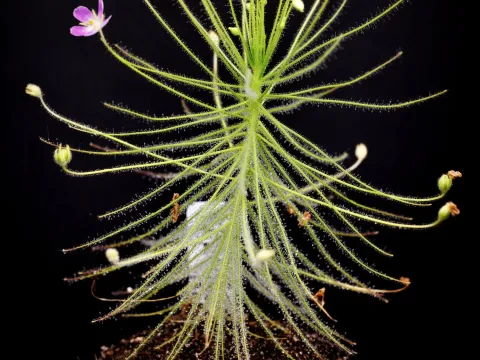
Byblis
Byblis
Byblis, commonly known as the rainbow plant, is a genus of carnivorous plants belonging to the monotypic family Byblidaceae. These plants are native to Australia and New Guinea, typically inhabiting seasonally moist, nutrient-poor soils in open savannas or wetlands.
What the section contains


Byblis
The plant is characterized by its linear leaves covered in glandular hairs that secrete a sticky mucilage. This substance traps small insects, which are then digested by enzymes to provide essential nitrogen that the plant cannot obtain from the poor soil.
To successfully cultivate Byblis, high levels of sunlight are mandatory. In their natural habitat, they grow in full sun; in indoor settings, strong artificial lighting or a very bright window is necessary to prevent etiolation and maintain leaf vitality.
The growing medium must be highly specific, acidic, and low in nutrients. A mixture of peat moss, perlite, and silica sand is generally recommended to provide excellent drainage and prevent the roots from becoming waterlogged.
Watering should only be done using distilled, deionized, or rainwater. Unlike many other carnivorous plants that prefer to sit in standing water, Byblis requires a more delicate balance, ensuring the soil stays moist but well-aerated to avoid root rot.
The primary threat to Byblis is poor air circulation combined with high humidity, which quickly leads to the proliferation of Botrytis (gray mold) and other fungal pathogens that attack the stems and roots.
The plant is highly susceptible to common greenhouse pests, especially aphids and mealybugs. These insects can devastate a plant by feeding on the nutrient-rich sap within the glandular leaves and growing tips.
Because Byblis is highly sensitive to chemicals, the use of standard insecticides is strictly discouraged, as it can cause immediate leaf burn or systemic toxicity. Integrated pest management and physical removal are preferred.
Incorrect substrate composition often results in mineral burn or chlorosis, which weakens the plant's immune system and makes it more vulnerable to opportunistic pathogens and environmental stress.
Overwatering is the leading cause of plant failure, typically resulting in rapid crown rot. Maintaining the correct moisture levels is the most critical aspect of the plant's horticultural requirements.