
Prince's Plume
Stanleya pinnata
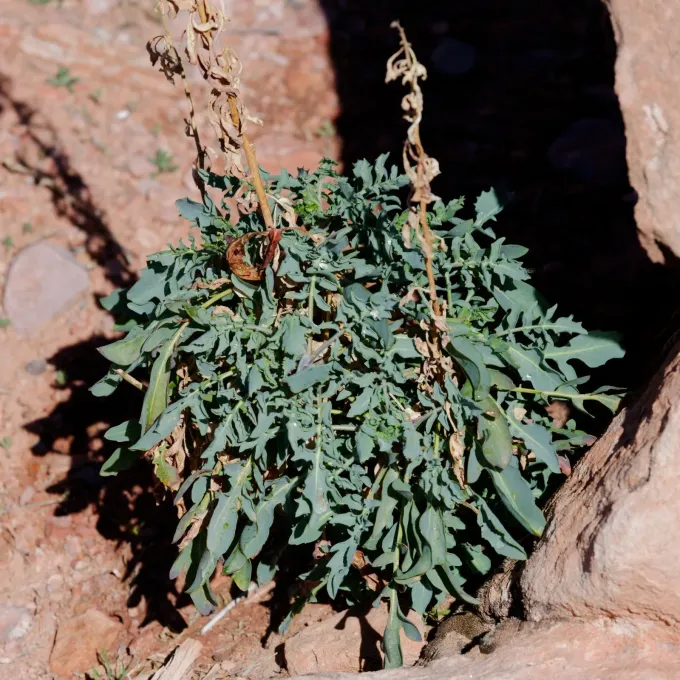
Description
Sowing dates
Prince's Plume (Stanleya pinnata) is a perennial herbaceous plant belonging to the Brassicaceae family. Seeds are typically sown in early spring once the soil temperature consistently reaches 10-12 degrees Celsius.
For successful germination, a moderately moist substrate is required, although the plant is highly sensitive to waterlogging, necessitating excellent soil drainage during the sowing phase.
The seeds should be planted at a shallow depth of 1-2 centimeters; as they are quite small, close contact with the soil is essential for uniform emergence in field conditions.
When grown for commercial or environmental purposes, it is recommended to maintain row spacing of 40 to 60 centimeters to ensure proper aeration and light exposure for each plant.
The plant demonstrates high growth vigor during its first year, establishing a robust root system which is critical for its long-term development in native or cultivated habitats.
Growing requirements
Native to arid regions of North America, this plant is naturally adapted to poor, often rocky or clay-heavy soils with high alkalinity levels common in desert environments.
The primary biological feature of Stanleya pinnata is its role as a selenium hyperaccumulator, meaning it can absorb and store selenium from the soil, making it valuable for environmental phytoremediation.
This crop is highly heliophilic and thrives under intense solar radiation, which is characteristic of the desert and semi-desert zones where the species naturally proliferates.
While not demanding regarding soil fertility, the plant requires excellent aeration in the root zone, making the incorporation of sand or fine gravel necessary when cultivating in heavy clay soils.
Watering should be measured; while the plant is remarkably drought-tolerant, consistent irrigation during the active vegetative phase can significantly boost biomass production and element accumulation.
Main diseases and pests
The main threats to Stanleya pinnata include various fungal diseases, such as root rot, which typically arise under conditions of excessive humidity or waterlogged soil environments.
Pests that commonly affect other Brassicaceae species, such as flea beetles, can pose a risk to young seedlings during the initial stages of vegetative development.
Aphids may infest the flower spikes during particularly dry periods, feeding on plant sap and potentially weakening the plant's overall vitality before the winter dormancy period.
Integrated pest and disease management for this crop relies on cultural practices, such as proper crop rotation, humidity control, and the timely removal of infected plant debris.
The use of chemical pesticides should be strictly limited, especially as the crop is frequently cultivated for ecological purposes or to harvest selenium-enriched biomass.
Harvesting
Harvesting of the above-ground biomass should occur during the full bloom phase, as this is when the concentration of accumulated minerals in the plant tissues is at its peak.
Mechanical mowing is the standard method for collecting green biomass, which is then processed, dried, or utilized for specialized soil remediation applications or fertilizer production.
If the cultivation goal is seed production, the spikes should be collected as soon as they begin to brown to prevent excessive seed shattering, a common trait in many Brassicaceae species.
Post-harvest treatment involves mandatory drying in well-ventilated areas to prevent mold growth and ensure the preservation of essential chemical compounds within the plant material.
The root system is often left undisturbed in the soil after harvest to maintain soil structure and continue the biological process of extracting excess selenium from the substrate.