
Stanleya albescens
Stanleya albescens
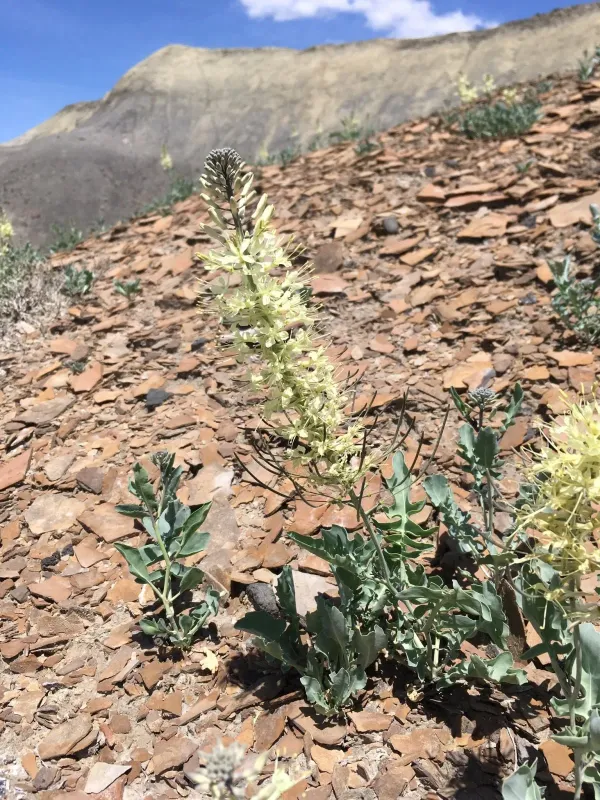
Description
Sowing dates
Stanleya albescens is native to arid regions, and its sowing schedule is typically aligned with the early spring season to take advantage of natural soil moisture accumulation.
The seeds require favorable temperature conditions to break dormancy, making the soil temperature in early spring a critical factor for successful germination and seedling establishment.
Planting depth should be shallow, generally within 1–2 centimeters, to prevent energy exhaustion in the seedlings as they emerge through the soil surface.
Proper spacing between rows is essential for this species to allow for the development of its substantial rosette and root system, which are critical for its survival in harsh environments.
Sowing in a uniform and controlled manner ensures that the crop can effectively occupy the soil surface and compete with native vegetation for light and minerals.
Growing requirements
Belonging to the Brassicaceae family, Stanleya albescens is scientifically recognized for its unique capability to accumulate high levels of selenium, which dictates its preference for specific mineral-rich soils.
The ideal environment for this species includes alkaline, well-draining soils that are characteristic of desert and semi-arid zones, where moisture accumulation is avoided.
Climatic requirements are centered around intense sunlight and low humidity, which support the plant's metabolic processes and mineral accumulation pathways.
The plant demonstrates significant drought tolerance, which is one of its primary agronomic advantages when grown in regions prone to water scarcity.
Soil management should prioritize drainage, as any waterlogging leads to rapid root decline and susceptibility to pathogens, ultimately reducing the health of the stand.
Yield
The yield of Stanleya albescens is determined by the environmental conditions and the availability of minerals in the soil, which are directly utilized by the plant during its vegetative growth phase.
Harvesting usually occurs at the peak of the plant's metabolic activity, often during the flowering phase, to ensure the maximum concentration of elements is retained within the plant tissue.
While the overall dry matter yield is moderate, the economic value is largely attributed to its specific chemical profile, which is highly sought after for phytoremediation and analytical applications.
Proper management of the cropping area, including weed control, is vital for achieving consistent yields, as the plant grows slowly during the initial stages of its lifecycle.
Continuous monitoring of soil mineral content is recommended to ensure that the yield quality remains consistent over multiple growing seasons in the same location.
Main diseases and pests
Common agricultural pests such as flea beetles, which target members of the Brassicaceae family, can pose a significant threat to young Stanleya albescens plants during their tender stages.
Fungal pathogens associated with excessive soil moisture are a constant risk, requiring careful management of irrigation and site drainage to mitigate potential crop loss.
Insects that feed on the foliage can cause secondary damage by vectoring viruses, which can hinder the growth and overall vitality of the crop stand.
Integrated pest management strategies are crucial, focusing on biological controls and environmental management rather than heavy pesticide use, which could interfere with the plant's chemical profile.
Preventive practices, including site preparation and the selection of disease-free planting locations, are the most effective methods to manage risks associated with this unique crop.