
Schimpera arabica
Schimpera arabica
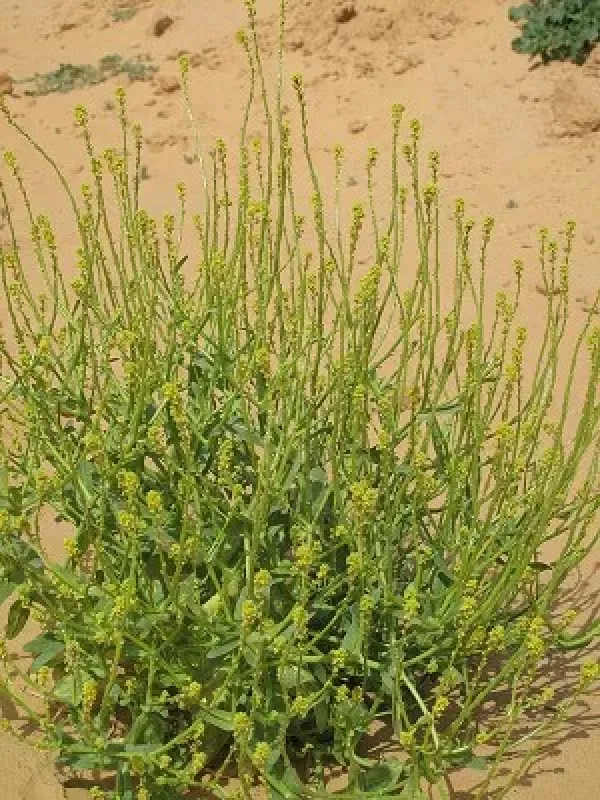
Description
Sowing dates
Schimpera arabica is a wild ephemeral plant, and therefore, organized industrial sowing is rarely practiced. Its life cycle is strictly linked to the short period of spring rainfall in desert regions.
Seeds germinate very quickly when favorable soil moisture is achieved. In natural conditions, the plants develop rapidly to complete their cycle before the onset of extreme summer heat.
For potential introduction or experimental cultivation, seeds should be sown in late autumn or early winter. This ensures the stratification period required for embryo awakening is fulfilled.
The sowing depth must be minimal, as the small seeds have limited nutrient reserves. Using light sandy substrates with good aeration is considered optimal for successful establishment.
When cultivating, it is essential to avoid waterlogging, which leads to seed rot. Schimpera is particularly sensitive to soil oxygen regimes during the emergence of the first seedlings.
Growing requirements
Schimpera arabica belongs to the Brassicaceae family. It is a typical representative of desert and semi-desert flora, highly adapted to extremely harsh and arid environments.
The crop prefers sandy, stony, or clay-sandy soils characteristic of the arid zones of the Middle East and North Africa. The plant exhibits high tolerance to soil salinity.
The primary climatic requirement is a short but sufficiently moist, cool period. Schimpera cannot tolerate prolonged exposure to freezing temperatures or excessive humidity.
The plant has a distinct xerophytic structure, allowing it to efficiently utilize rare rainfall. Its root system is capable of quickly absorbing moisture from the upper soil layers immediately after rains.
Intense sunlight throughout the day is necessary for optimal growth. Shading leads to a sharp decrease in photosynthesis intensity and stunts the overall development of the plants.
Yield
Schimpera productivity in the wild depends directly on the amount of annual precipitation. In favorable years with sufficient moisture, the plant forms dense, lush communities.
The green mass of Schimpera arabica in its natural range is used by local nomads as pasture forage for camels and small ruminants. Its nutritional value is highest before the flowering phase begins.
The seed productivity of this species is quite high, ensuring population survival in unstable climates. Once matured, the seeds are easily dispersed by the wind.
Under cultivation conditions, specific yield data remains scarce. It is expected that under irrigated agriculture, the biomass production could be significantly higher than in wild populations.
The economic significance of the crop is currently limited to its role in maintaining desert ecosystems. No specific agricultural cultivars have been developed to date.
Main diseases and pests
The primary threats to stands may include phytophagous insects characteristic of the Brassicaceae family. In particular, flea beetles can cause damage to seedling cotyledons.
In high-humidity conditions, plants are susceptible to fungal infections such as downy mildew. Excess moisture in the root zone often triggers root rot diseases.
Competition from other ephemeral species can reduce plant density. In drought years, the development of pests is often slowed, providing the crop with a certain advantage.
Livestock grazing is an anthropogenic factor affecting population numbers. Overgrazing during the flowering phase can lead to the exhaustion of the soil seed bank.
Unfavorable weather events, such as sharp frosts during the growing season or hot dry winds, can cause premature plant death. Resistance to specific viral diseases is not well-studied.
Harvesting
Harvesting of green mass in traditional management is carried out manually during the period of maximum nutrient accumulation. This usually occurs before the stems begin to lignify.
Seed collection is performed after full maturation when the pods turn a characteristic straw color. It is crucial to harvest before the seeds shatter onto the ground.
In experimental conditions, harvesting requires a gentle approach due to the fragility of the pods. It is recommended to use mechanized means with minimal mechanical impact.
The harvested crop requires immediate drying in well-ventilated areas to prevent mass overheating. Seed moisture content during storage should not exceed 10-12%.
Seed cleaning is performed using sieves of various diameters to remove plant debris. Properly prepared seeds retain their viability for several years.