
Muricaria prostrata
Muricaria prostrata
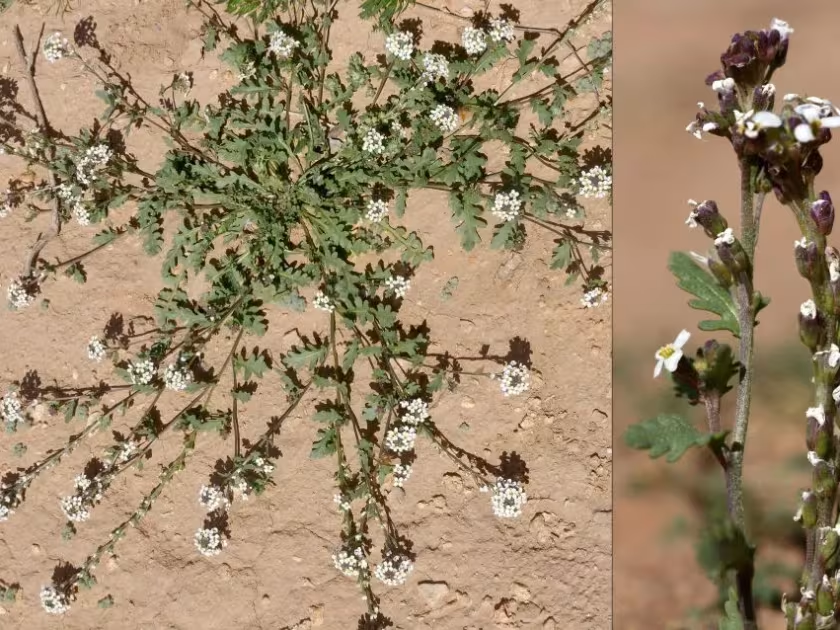
Description
Growing requirements
Muricaria prostrata is a unique annual herbaceous plant belonging to the Brassicaceae family. It is recognized primarily for its remarkable adaptation to extreme environmental stressors, specifically within arid and semi-arid desert landscapes.
Originating from the desert regions of North Africa, this species serves as a biological model for drought and salinity tolerance. It thrives in ecological niches where typical agricultural crops would fail due to the high mineral concentration and lack of moisture in the substrate.
The botanical structure is characterized by a prostrate growth habit, where the stems spread along the ground to protect the root zone from evaporation. The plant exhibits xerophytic features, such as specialized trichomes and reduced leaf surface area, which aid in water retention.
Climatic requirements are strictly defined by high heat tolerance and the ability to withstand extreme diurnal temperature fluctuations. The plant demands high levels of direct sunlight to complete its biological cycle efficiently and ensure proper seed maturation.
For cultivation purposes, Muricaria prostrata requires sandy or stony, well-drained soils with high salinity levels. It is unsuitable for fertile, water-retaining soils, as it has evolved specifically to utilize marginal lands and saline environments for its growth.