
Megacarpaea megalocarpa
Megacarpaea megalocarpa
Description
Sowing dates
Megacarpaea megalocarpa is a notable member of the Brassicaceae family, native to the arid and mountainous regions of Central Asia. Understanding the timing of its sowing is essential for achieving high germination rates in a field environment.
The optimal time for sowing is early spring when the soil temperature begins to rise consistently. As the seeds are quite large and resilient, they show excellent germination energy when placed in soil with adequate moisture content.
The seeds should be sown at a depth of 2 to 3 centimeters. This depth provides the necessary cover to retain moisture while allowing the emerging seedling to reach the surface with sufficient vigor.
During the first year, the plant focuses on developing a robust basal rosette of leaves and a fleshy taproot. It is during this vegetative phase that the plant establishes the energy reserves required for the subsequent flowering stages.
Proper spacing between rows is recommended to facilitate mechanical weeding and ensure that the plants have enough space for optimal root development. A wide-row planting strategy is generally preferred for this crop.
Growing requirements
This species is highly adapted to extreme temperature fluctuations and arid environments. It thrives in open, sunny locations where it can benefit from direct exposure to light, which is crucial for its development.
The plant prefers well-drained, light-textured soils such as sandy loams. Heavy or clay-rich soils that are prone to waterlogging should be avoided, as the root system is highly sensitive to excessive humidity.
Soil pH should ideally be neutral or slightly alkaline. The plant displays significant tolerance to poor soil conditions but performs best when given basic nutrients, particularly in the initial stages of establishment.
Water requirements are relatively low compared to traditional fodder crops, owing to the plant's deep taproot that allows it to access subsoil moisture. This makes it an ideal candidate for dryland farming.
Protection from strong winds during the early establishment phase can be beneficial, although established plants are generally quite sturdy and capable of withstanding harsh environmental conditions.
Yield
Megacarpaea megalocarpa is valued for its biomass production in regions where traditional forage crops might fail due to lack of water. It can produce a significant amount of green matter suitable for livestock feed.
Yields are maximized when nitrogen-rich fertilizers are applied at the beginning of the growth season. This promotes vigorous leaf growth, which constitutes the bulk of the harvestable material.
The plant reaches its peak biomass production by the second or third year, when the flowering stalks develop. These stalks contribute significantly to the total yield when harvested at the right phenological stage.
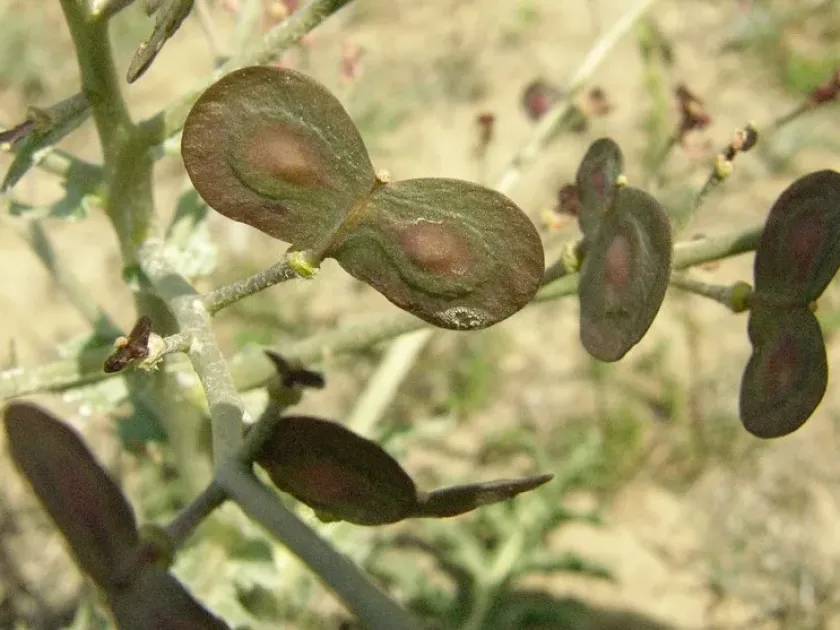
Seed productivity is another important aspect of this culture. The large pods produce a stable yield of seeds, which can be stored for future planting or processed for other agricultural applications.
Maintaining a crop rotation cycle that prevents planting in areas previously occupied by other Brassicaceae is vital to sustaining high yields and preventing the buildup of soil-borne pathogens.
Main diseases and pests
Like many species in the Brassicaceae family, Megacarpaea is susceptible to crucifer flea beetles, which can cause severe damage to young leaves. Early monitoring and prompt intervention are essential.
Fungal diseases such as downy mildew can occur under conditions of high humidity or poor air circulation. Ensuring adequate spacing and keeping the area free of excess weeds helps mitigate these risks.
Aphids may occasionally target the flower stalks, potentially affecting the quality and quantity of the seed harvest. Regular inspection of the crop during the flowering phase is recommended for integrated pest management.
Wireworms can pose a threat to the taproot system, particularly if the land was recently converted from grassland. Pre-sowing soil assessment and treatment are recommended to protect the crop.
Good agricultural hygiene, including the removal of crop residues and deep plowing, remains the most effective way to keep the overall phytosanitary status of the field at a high level.
Harvesting
The harvest of green matter should take place before the stems become woody, as this ensures high digestibility and nutrient content for animal fodder applications.
For seed production, harvesting should be performed once the pods have matured and dried on the stalks. It is critical to avoid delays, as the pods may shatter, leading to significant yield losses.
Mechanical harvesting equipment should be calibrated specifically for these seeds to prevent mechanical damage. Once harvested, the seeds should be dried properly to reach a stable moisture content for storage.
Storing the seeds in a cool, dry, and well-ventilated environment is necessary to prevent spoilage and maintain high germination viability for the next season.
Plant remains after harvest can be incorporated back into the soil as organic matter, provided they are free from pests and diseases, thereby helping to improve the overall soil structure over time.