
Lesquerella fendleri
Lesquerella fendleri
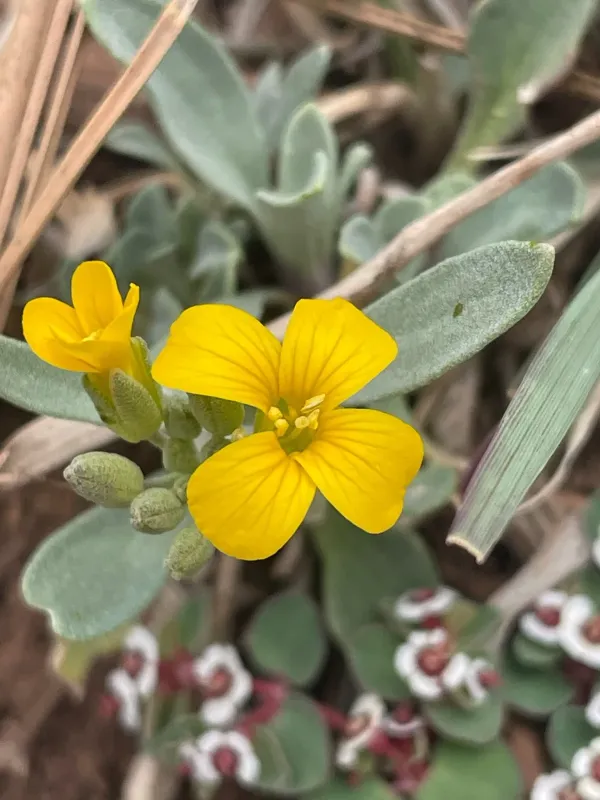
Description
Sowing dates
Lesquerella fendleri, commonly known as Fendler's bladderpod, is a member of the Brassicaceae family recognized for its adaptation to arid and semi-arid environments. It is gaining traction as a potential industrial oilseed crop.
The sowing process is usually performed in the fall, taking advantage of cool-season moisture which is crucial for early root establishment in desert-like soils.
Precision seeding is necessary because of the small seed size; farmers often utilize air-seeding technology to ensure optimal depth and spacing for maximum emergence.
Temperature management during germination is vital, as the seeds require a consistent range of 10–15 degrees Celsius to trigger uniform physiological growth.
Targeting a specific plant population density is essential to ensure that the field reaches its full yield potential while managing resource competition effectively.
Growing requirements
This crop thrives in well-drained, sandy, or gravelly soils and is notable for its salinity tolerance, making it an excellent option for marginal land utilization.
Full sun exposure is an absolute requirement for Lesquerella fendleri, as the plant is highly sensitive to canopy shading and requires high light intensity for development.
While known for its drought resistance, irrigation can be applied strategically during the flowering and seed-set stages to significantly boost the final output.
Soil pH should remain near neutral or slightly alkaline, reflecting its natural habitat in the southwestern United States and Northern Mexico.
Fertilization regimes are generally low-input, focusing primarily on avoiding excessive nitrogen to prevent stem lodging and ensure better oil quality in the seeds.
Yield
The yield of Lesquerella fendleri is highly dependent on effective water management and site selection, typically ranging between 1 to 2 metric tons of seeds per hectare.
The seeds are the primary harvest product, valued for their unique oil profile, which includes high levels of lesquerolic acid, a hydroxy fatty acid similar to castor oil.
This biochemical profile makes the crop highly attractive for industrial applications, ranging from lubricants to personal care products and high-performance plastics.
Ongoing research aims to stabilize yield variability across different seasons, focusing on breeding programs that enhance seed retention in the pods before harvest.
Harvested seeds require meticulous cleaning and drying processes to ensure the shelf life of the extracted oil and to maintain industrial quality standards.
Main diseases and pests
Disease pressure in Lesquerella fendleri is primarily associated with fungal pathogens, particularly under conditions of high humidity or poor field drainage.
Insect pests, such as aphids and flea beetles, are common challenges during the early growth stages that necessitate integrated pest management strategies to protect young seedlings.
Weed competition is a significant threat early in the crop cycle because the plant exhibits a slow growth rate during its initial rosette-forming phase.
Crop rotation remains a key strategy to mitigate soil-borne diseases that are specific to the Brassicaceae family, preventing the buildup of harmful populations.
Regular field scouting is the standard agronomic practice to monitor for early signs of disease and pest outbreaks, allowing for timely intervention.
Harvesting
Harvesting is conducted via direct combining when the plants reach physiological maturity and the seed pods are sufficiently dry to shatter easily during threshing.
One of the primary challenges at harvest is the tendency of pods to shatter prematurely if the field is left too long under intense sunlight and heat.
Combine settings must be carefully calibrated to minimize seed loss, specifically by adjusting air volume and drum speed to handle the small, delicate seeds efficiently.
Harvest should ideally occur during low-humidity windows to ensure the seed moisture remains within the safe storage threshold of approximately 10%.
Post-harvest handling involves cleaning the seeds using screens to remove chaff and debris, followed by aeration in storage facilities to preserve seed viability.