
Lesquerella gordonii
Lesquerella gordonii
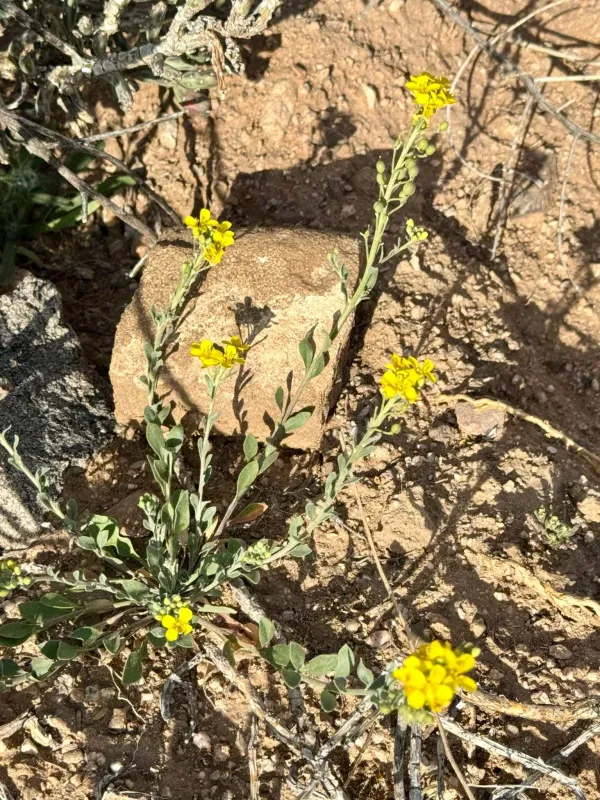
Description
Sowing dates
Lesquerella gordonii, a member of the Brassicaceae family, is an annual herbaceous plant widely researched for its potential as a source of hydroxy fatty acids.
The sowing process typically occurs in the autumn season, allowing the seeds to benefit from winter moisture and establish a strong root system before the heat.
Precision planting with row spacing between 30 and 45 centimeters is recommended to ensure optimal plant density and sufficient airflow within the canopy.
Given the small size of the seeds, they should be placed at a shallow depth to ensure quick germination and rapid emergence after the first spring rains.
In regions with harsh winters, early spring planting is an alternative, though it might result in a slightly lower yield due to a condensed growing cycle.
Growing requirements
This crop is highly prized for its extreme drought tolerance, making it an excellent candidate for agricultural production in semi-arid and desert environments.
Well-drained, sandy, or sandy-loam soils are ideal for this plant, as it is highly susceptible to root damage in waterlogged or heavy clay conditions.
It thrives in neutral to slightly alkaline soil pH and requires minimal inputs, provided that the soil has sufficient nutrients to support early vegetative growth.
Full sun exposure is crucial for both the vegetative development and the oil accumulation process within the developing seeds of the plant.
The plant demonstrates a remarkable ability to survive temperature fluctuations, though extreme heat during the flowering stage may impact pollination.
Yield
The yield of Lesquerella gordonii is highly dependent on environmental conditions, particularly the distribution of rainfall during the critical developmental stages.
Under managed cultivation systems, growers can achieve seed yields ranging from 800 to 1200 kg per hectare, depending on local conditions.
The primary economic value lies in the oil content, which features specialized fatty acids with unique chemical properties for industrial lubricants and plastics.
Genetic improvements are currently focused on uniform maturity and pod retention, which are essential factors for increasing harvested yields.
Efficient management of pollination through the presence of bees or other beneficial insects can significantly boost seed set and overall harvest quality.
Main diseases and pests
Typical pests affecting Brassicaceae, such as flea beetles and various aphid species, represent the main biotic threats to healthy plant development.
Fungal diseases like downy mildew may appear if planting density is too high or if the crop is grown in areas with poor ventilation and high humidity.
Weed management during the early establishment phase is critical, as the crop lacks the rapid canopy closure needed to naturally suppress competing vegetation.
Early identification of pest outbreaks is essential for implementing integrated pest management strategies without harming the local ecosystem.
Careful selection of crop rotation is necessary to break the life cycles of soil-borne pathogens and ensure long-term productivity of the fields.
Harvesting
Harvesting is performed using standard grain combines once the majority of the pods have turned brown and the seed moisture content is appropriately low.
The timing of the harvest is critical; delayed harvesting can lead to significant yield losses due to the natural dehiscence and shattering of the pods.
After harvesting, the seeds must be dried and cleaned immediately to remove foreign material that could absorb moisture and promote microbial spoilage.
Storage facilities should be cool and dry to maintain the chemical stability of the valuable fatty acids stored within the oil of the seeds.
Modern equipment modifications, such as adjusted reel speeds, can help minimize shattering losses during the mechanical harvesting process.