
Dontostemon dentatum
Dontostemon dentatum
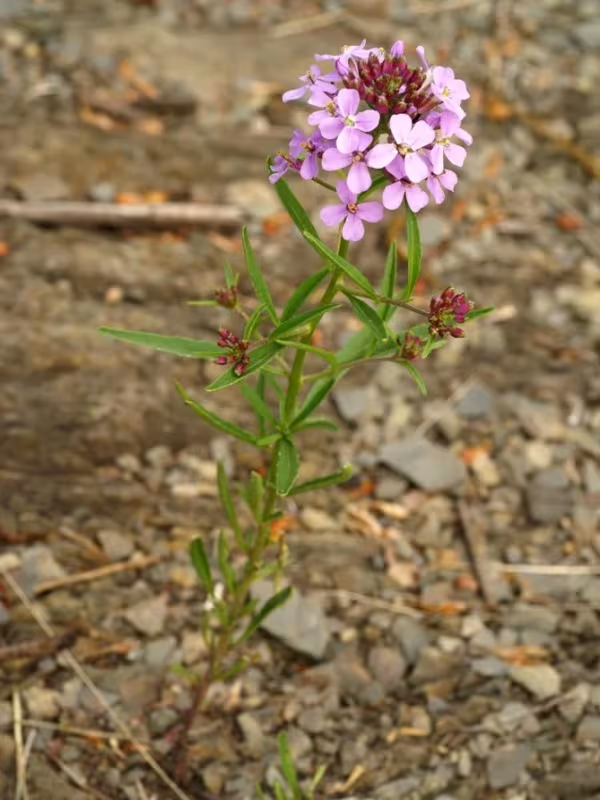
Description
Sowing dates
Dontostemon dentatum, a member of the Brassicaceae family, is a crop with specific environmental requirements that dictate the timing of its sowing. Successful establishment begins with selecting a planting window when soil temperatures are consistently above the freezing point.
Sowing should take place in early spring to allow the crop to take advantage of residual soil moisture. As the seeds are quite small, precision seeding is necessary to ensure consistent depth, ideally between 1 and 2 centimeters, which encourages vigorous emergence.
Proper seedbed preparation is vital; the soil should be fine-textured and firmly packed after sowing to ensure optimal seed-to-soil contact. This practice minimizes the risk of desiccation and promotes uniform germination across the field.
The planting density must be carefully calculated based on soil fertility and potential weed pressure. A balanced density prevents excessive competition for nutrients, which is essential for uniform maturity during the harvest season.
In regions with potential for dry spells, early planting is strongly recommended. This strategy allows the crop to establish a deep root system and gain sufficient biomass before the onset of summer moisture deficits.
Growing requirements
The crop thrives in well-drained, fertile soils with a neutral pH. Excessive moisture in the root zone is detrimental, as it encourages root rot pathogens and restricts oxygen availability to the developing plant system.
Dontostemon dentatum is highly photosensitive and performs best in open locations with high sunlight exposure. Adequate solar radiation is a key factor in maximizing the accumulation of photosynthetic products and ensuring high-quality yield.
Regarding climate, the plant shows good adaptation to moderate temperatures and seasonal variations. While it exhibits tolerance to drought, consistent moisture during the flowering and seed-filling stages is critical for achieving maximum production.
Soil nutrient management should focus on maintaining a balance between macro and micronutrients. Over-application of nitrogen should be avoided to prevent excessive vegetative growth, which can make the plants more prone to lodging.
Air circulation is another important factor for the health of the plants. Proper spacing ensures that the microclimate within the canopy remains dry, reducing the risk of humidity-related diseases during the later stages of growth.
Main diseases and pests
As a member of the mustard family, Dontostemon dentatum is susceptible to common Brassicaceae pests, most notably the flea beetle. These insects can devastate young seedlings shortly after emergence if not managed effectively.
Pathogenic fungi, such as downy mildew and Alternaria, pose significant risks, especially during periods of high humidity and rainfall. These infections can lead to premature leaf drop and negatively impact the overall vigor of the crop.
Integrated pest management (IPM) is the most effective approach to mitigating threats. This includes robust crop rotation cycles that avoid planting Brassicaceae species in the same field for several consecutive years to break pest life cycles.
Monitoring the field for symptoms of disease or signs of pest activity should be performed on a weekly basis. Early detection allows for targeted and efficient application of protective measures, reducing the need for broad-spectrum chemical use.
Weed control is also essential, as many common weeds serve as secondary hosts for both pests and viruses. Maintaining clean field borders and using clean, certified seed lots are fundamental components of an effective plant health strategy.