
Gastrocotyle hispida
Gastrocotyle hispida
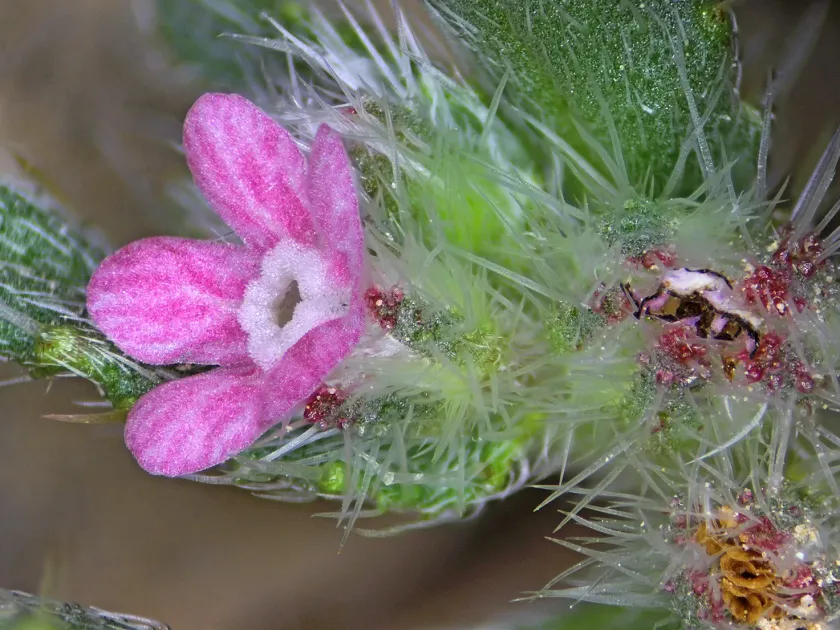
Description
Sowing dates
Gastrocotyle hispida is a wild herbaceous plant and is considered a weed rather than a cultivated agricultural crop in all regions of its growth.
The plant germinates naturally in cultivated fields, often emerging concurrently with the sowing of winter or early spring cereals and grain legumes.
Its germination cycle is strongly influenced by temperature fluctuations and moisture availability, allowing it to adapt to various seasonal changes.
The plant demonstrates a high reproductive capacity, producing large amounts of seeds that contribute to long-term soil seed bank persistence.
Early-stage development occurs rapidly, which enables the plant to establish itself before the primary crop reaches its intensive growth phase.
Growing requirements
As a member of the Boraginaceae family, this plant is well-adapted to environments that offer sufficient sunlight and moderate moisture levels.
It prefers sandy and light-textured soils that allow for efficient moisture utilization, making it prevalent in many arid and semi-arid landscapes.
Gastrocotyle hispida exhibits significant drought tolerance, which allows it to thrive in conditions where other more sensitive plants might struggle.
The plant is highly photosensitive and performs best in open habitats, showing reduced growth efficiency when shaded by dense crop canopies.
Soil nutrient levels do not strictly limit its spread; the species effectively competes for resources even in soils with varying mineral compositions.
Main diseases and pests
The primary concern regarding Gastrocotyle hispida in agriculture is its role as a resource competitor, reducing crop yield by consuming soil water.
Similar to other members of the borage family, this species may act as an alternative host for pathogens that pose risks to commercial cultivars.
The presence of this weed creates a significant challenge for field management, requiring the implementation of integrated pest control strategies.
Chemical control involving selective herbicides remains the most widespread method for managing established populations within large agricultural tracts.
Cultural methods, including proper crop rotation and timely mechanical weeding, are essential for reducing its impact on the final harvest quality.
Harvesting
The presence of this weed during harvest significantly impacts operational efficiency, as the rough stems can impede combine harvester performance.
Contamination of the grain batch with weed seeds and plant debris increases moisture levels, potentially lowering the grade of the harvested commodity.
Post-harvest cleaning operations are necessary to separate the weed biomass from the grain, which adds extra cost and time to processing.
Stubbing and light disc cultivation following harvest are recommended practices to minimize the return of seeds into the soil seed bank.
Maintaining high standards of seed certification is critical to prevent the dissemination of Gastrocotyle hispida seeds into new agricultural areas.