
Bothriospermum chinense
Bothriospermum chinense
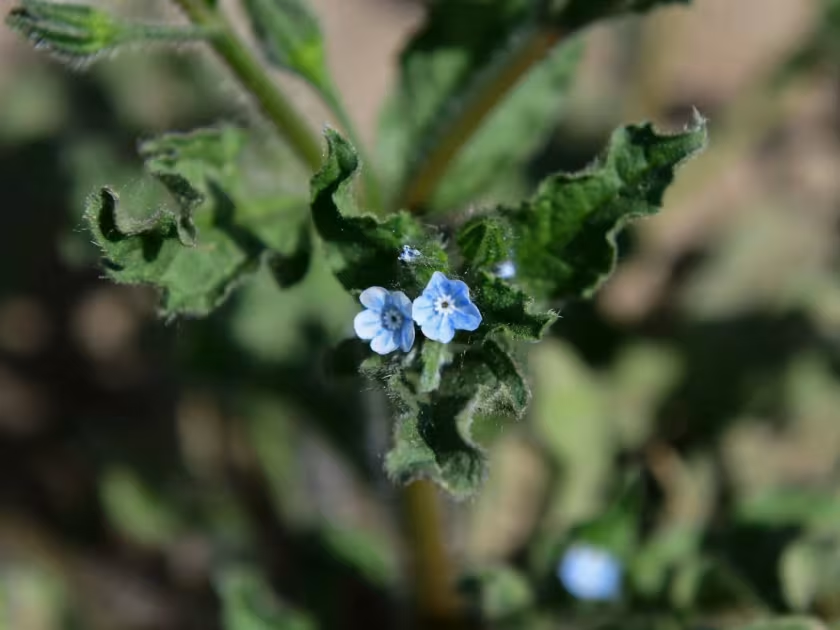
Description
Growing requirements
Bothriospermum chinense is an annual or biennial herbaceous plant belonging to the Boraginaceae family. While it is not typically grown as a commercial crop, it is of interest in agricultural botany due to its presence as a weed in various cropping systems.
The plant is native to East Asia, with a wide distribution across China, Korea, Japan, and parts of the Russian Far East. It thrives in open, sunny environments and is commonly found in damp soil conditions, meadows, and along the banks of freshwater sources.
Botanically, Bothriospermum chinense features a branched stem that can grow up to 40 cm in height. The foliage is characterized by lanceolate to oblong leaves covered in stiff hairs, a distinctive feature that helps the plant minimize water loss and protect itself from herbivores.
The inflorescence consists of small, delicate flowers, typically pale blue or white, arranged in loose racemes. The plant’s reproductive strategy involves prolific seed production, allowing it to colonize disturbed soils quickly throughout the spring and early summer seasons.
It possesses a fibrous root system that is highly efficient at nutrient uptake in moist substrates. Its environmental adaptability allows it to persist in diverse soil textures, ranging from sandy soils to more fertile, organic-rich loams common in agricultural settings.
Main diseases and pests
As a weed, Bothriospermum chinense poses a challenge to crop yields by competing for sunlight, water, and essential nutrients. Mechanical cultivation, such as harrowing and hoeing during the early development stages, remains the most effective way to manage its population.
The plant can serve as an alternative host for various agricultural pests, including aphids and leaf-eating beetles. Proximity to vegetable or cereal crops can lead to increased pest pressure, necessitating integrated pest management (IPM) strategies to protect the primary harvest.
Fungal pathogens affecting this species are primarily limited to local outbreaks of mildew or foliar spots. However, these fungi can sometimes cross-infect closely related economic crops, making weed control a component of overall field sanitation.
A major concern regarding this species is the longevity of its seed bank in the soil. Seeds can remain dormant for multiple seasons, which means that even after the initial eradication, new plants may emerge following subsequent soil disturbances.
Chemical control involving selective herbicides is possible, though it should be practiced in accordance with regional regulations. Rotating herbicides with different modes of action is highly recommended to ensure long-term suppression of the weed population.