
Bothriospermum tenellum
Bothriospermum tenellum
Description
Growing requirements
Bothriospermum tenellum is an herbaceous annual plant belonging to the Boraginaceae family. While not a primary crop for harvest, understanding its biology is essential for managing its presence in agricultural fields where it thrives as a weed.
The plant originates from East Asia, including regions across China, Japan, and Korea. It has adapted to various temperate climates, establishing itself in disturbed soils, meadows, and agricultural land, often outcompeting delicate crops.
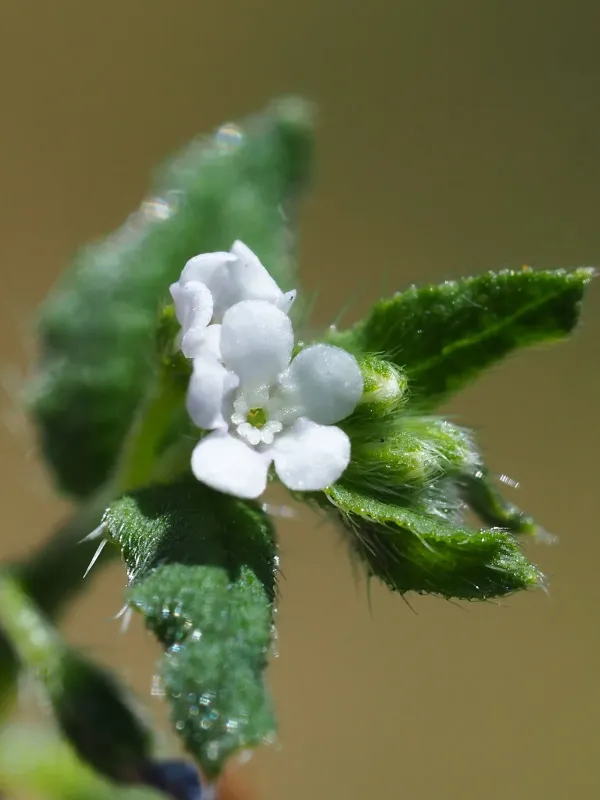
Its botanical features include a branched, decumbent stem covered in fine hairs. The leaves are typically lanceolate and sessile. The small flowers are pale blue to white, characteristic of the borage family, and appear in raceme-like inflorescences.
It prefers moist, nitrogen-rich soil and requires moderate sunlight to reach maturity. Its rapid growth cycle allows it to germinate early in the spring, giving it a competitive advantage over slower-growing cultivars in the same field.
Propagation is exclusively through seeds. The plant demonstrates high reproductive efficiency, producing a vast number of seeds that can persist in the soil bank for years, waiting for favorable conditions for germination.
Main diseases and pests
As an agricultural weed, its main threat is the direct competition for water and soil nutrients. Dense mats of this plant can significantly reduce the yield of vegetable and cereal crops if left uncontrolled during the early vegetative stage.
It can act as a secondary host for various viral diseases transmitted by insects such as aphids. These vectors often use the plant as a temporary habitat before moving onto commercial crops, increasing the risk of virus outbreaks.
Controlling Bothriospermum tenellum requires a combination of mechanical and chemical approaches. Shallow cultivation is effective for destroying young seedlings, while selective broad-spectrum herbicides are used during the early development stage.
Crop rotation serves as a critical preventive measure. Introducing competitive cover crops can suppress the growth of the weed by limiting the amount of light and space available for it to establish a dominant stand.
Finally, field sanitation and the use of certified, high-quality seeds are vital to prevent the introduction and spread of this plant. Regular field inspections are recommended to spot and remove early patches before they set seeds.