
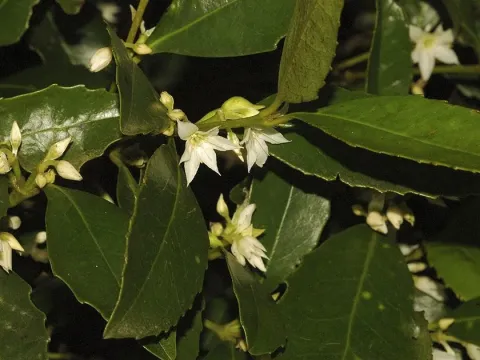
Doryphora
Doryphora
Doryphora is a genus of evergreen trees and shrubs belonging to the Atherospermataceae family. Native to the rainforests of eastern Australia, these plants are highly regarded for their intense, pleasant fragrance.
What the section contains

Doryphora
The botanical structure of Doryphora is characterized by dense, glossy leaves and an elegant branching pattern. In its natural habitat, it can reach significant height, though cultivated specimens are often kept at a manageable size.
Regarding soil requirements, Doryphora thrives in well-draining, nutrient-rich substrates with a slightly acidic pH. Consistent moisture is necessary for healthy foliage, but waterlogging must be strictly avoided.
Climatic conditions for Doryphora should ideally mimic a temperate or subtropical environment. The plant prefers protection from harsh midday sun and strong winds, favoring positions with dappled light.
In terms of agricultural and commercial use, Doryphora is valued for its essential oils. It is often integrated into botanical collections or specialty gardens where its unique scent and evergreen appearance contribute to the aesthetic value.
The primary threats to Doryphora are fungal root pathogens, which typically flourish in environments with poor drainage or excessive humidity. Monitoring irrigation frequency is essential for plant longevity.
Pests such as scale insects and mealybugs represent a significant challenge for this genus. These organisms attach to the leaves and stems, draining the plant's resources and causing localized stunted growth.
Environmental stress, such as sudden temperature drops or lack of humidity, often weakens the plant's natural defenses. Ensuring a stable microclimate is crucial for keeping the plants vigorous and resistant to infections.
Leaf spot diseases can occur during humid seasons if there is insufficient air circulation around the crown. Proper spacing and thinning of crowded branches are effective management techniques for professional growers.
Regular monitoring for signs of nutrient deficiency, such as yellowing leaves or thinning foliage, allows for early intervention with balanced fertilizers, ensuring the plant remains robust against potential pest attacks.