
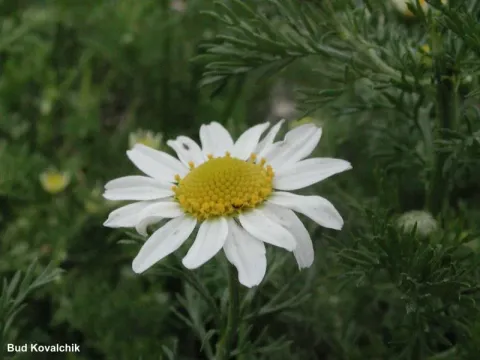
Tripleurospermum decipiens
Tripleurospermum decipiens
Tripleurospermum decipiens is an annual herbaceous plant belonging to the Asteraceae family. In agricultural settings, it is primarily managed as a troublesome weed that affects the yield potential of various crops.
What the section contains
Tripleurospermum decipiens
Seed germination typically occurs in early spring when soil temperatures reach 6-8 degrees Celsius. The species is known for its ability to produce multiple germination flushes throughout the growing season.
The life cycle of this plant is rapid, allowing it to compete effectively with winter and spring cereal crops. Early identification is crucial for managing the weed density before it reaches the reproductive stage.
Agricultural practices such as shallow cultivation or deep ploughing are employed to bury seeds and prevent their emergence. Seed longevity in the soil bank necessitates long-term management strategies.
Integrated weed management focuses on depleting the seed bank by utilizing a combination of crop rotation and timely soil disturbance before planting the main commodity crop.
This species is highly adaptable and thrives in a wide range of soil types, including loams and clays. It is commonly found in disturbed sites, such as field edges and cultivated lands.
Light availability is a primary growth factor. While the plant can tolerate some competition, it grows most vigorously in areas with low crop density and high sun exposure.
The plant demonstrates a remarkable tolerance to varying temperature regimes. It is well-suited to temperate climates and can maintain development even under fluctuations in seasonal weather patterns.
Soil nutrient status does not significantly limit its growth, as it efficiently utilizes available nitrogen and phosphorus. This makes it a competitive species in nutrient-rich agricultural fields.
Water availability is essential for seedling establishment. While the plant is drought-tolerant once mature, consistent moisture levels during the early growth stages facilitate its rapid spread.
Tripleurospermum decipiens serves as a host for several agricultural pests, including aphids. The presence of this weed can lead to increased pest pressure on adjacent primary crops.
Fungal diseases such as powdery mildew can affect the weed, potentially acting as a source of inoculum for neighboring susceptible crops. This interaction underlines the importance of weed-free fields.
Chemical control involving selective herbicides is the most widely adopted method for large-scale management. Timing applications to the early rosette stage is critical for maximum efficacy.
Mechanical cultivation remains a viable option for organic farming systems. Frequent row cultivation during the crop's development helps disrupt root growth and reduces the seed output.
Effective management also requires monitoring adjacent non-crop areas to prevent seed dispersal into the field. Maintaining clean equipment is equally important to stop the spread of seeds between fields.