
Schizogyne sericea
Schizogyne sericea
Description
Growing requirements
Schizogyne sericea is a perennial semi-shrub belonging to the Asteraceae family. It is endemic to the Canary Islands, where it has evolved to thrive in harsh coastal environments characterized by high salinity and intense solar radiation.
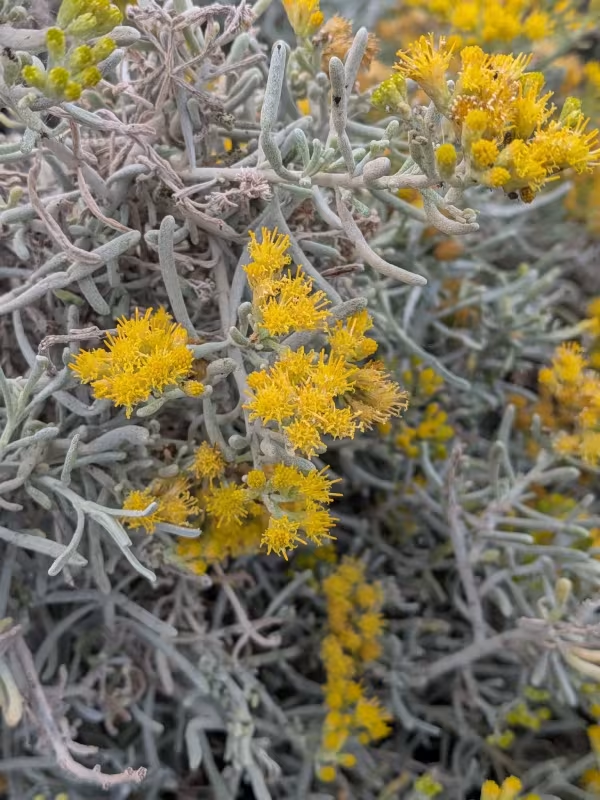
Botanically, the plant is distinguished by its dense, silky, silvery indumentum, which helps to reduce transpiration and protect the leaf surface from intense sunlight. It typically grows as a compact shrub with woody stems at the base.
The cultivation of this species requires well-draining, sandy or rocky substrates. It is a classic halophyte, meaning it is highly tolerant of saline soils that would be toxic to most conventional agricultural crops.
Climatic requirements focus on warmth and light. The plant is not frost-tolerant and requires subtropical or Mediterranean conditions to survive and thrive. It prefers full sun exposure to maintain its characteristic morphology.
Agricultural management should prioritize minimal watering, as the species is highly adapted to arid conditions. It is essential to prevent waterlogging, which is the primary cause of plant loss in non-natural growing environments.
Main diseases and pests
The main threats to Schizogyne sericea involve environmental stressors, particularly high humidity and poor air circulation. These conditions often lead to the rapid development of fungal pathogens, specifically root rot.
Pests such as spider mites and mealybugs can infest the plant, especially in glasshouse or indoor environments. These insects target the young, tender parts of the plant and can cause severe damage if left unmanaged.
Preventive measures include maintaining proper irrigation protocols and ensuring that plants are spaced adequately to allow for air flow. This significantly reduces the risk of fungal infections such as Botrytis.
If an infestation occurs, integrated pest management practices should be followed. Manual removal or the use of targeted biological controls is often preferred to avoid chemical damage to the plant's delicate hairs.
Root rot, the most lethal threat, can be managed by ensuring the substrate remains dry between waterings. Use of high-quality inorganic growing media is recommended to maintain the necessary aeration levels for the roots.