
Rough hyoseris
Hyoseris scabra
Description
Growing requirements
Rough hyoseris (Hyoseris scabra) is a herbaceous perennial plant belonging to the Asteraceae family. It is typically found in Mediterranean ecosystems, playing a role in maintaining the biodiversity of natural pastures and grassland areas.
The plant originates from the Mediterranean basin, where it has adapted to mild, wet winters and long, hot, dry summers. Its geographical distribution focuses on areas with rocky or sandy soils, where it can compete effectively with other Mediterranean flora.
Regarding soil requirements, Hyoseris scabra prefers well-drained, porous substrates. It shows high resilience to low nutrient levels, allowing it to thrive in conditions where more demanding agricultural crops would fail to establish.
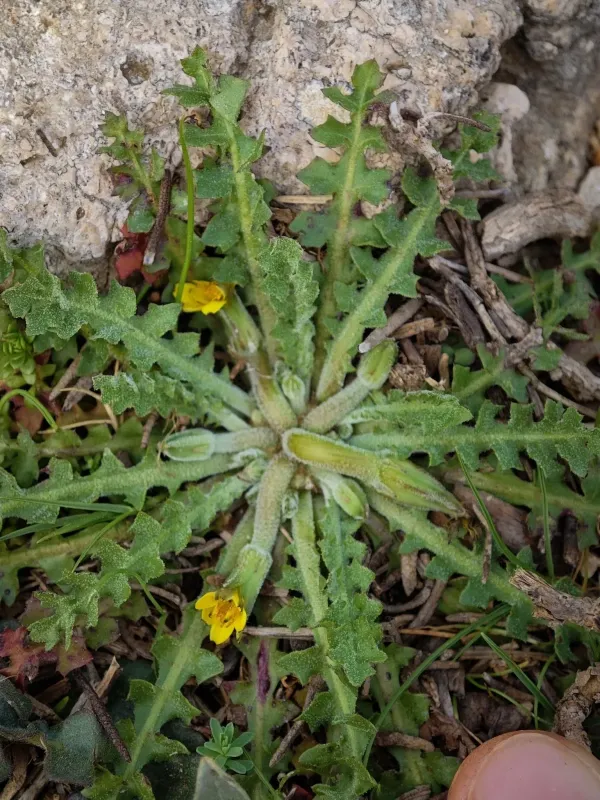
The plant possesses a basal rosette structure, which is a key adaptation for survival in environments subject to frequent grazing or mowing. The leaves are characterized by a coarse texture, which reduces transpiration rates during the peak of the dry season.
Climate adaptability is one of the strengths of this species. It initiates its growth cycle early in the spring, allowing it to complete its reproductive stage before the onset of the extreme drought typical of its native habitat.
Main diseases and pests
The main phytosanitary threats to rough hyoseris include fungal pathogens that thrive in high humidity. Powdery mildew can affect the leaf surface, particularly if the plant density is too high or air circulation is inadequate.
Insects such as aphids are frequently observed on the flower stems. These pests weaken the plant by extracting phloem sap, which can lead to reduced seed set and weakened vigor for the following growing season.
Soil-borne pests like wireworms pose a threat to the plant's root system. In agricultural settings, these organisms can cause patches of dieback, leading to uneven crop development and gaps in the field.
Weed infestation is a primary limiting factor during the early establishment phase. As a relatively slow grower, the plant is easily outcompeted by invasive grasses unless proper weed management practices are implemented early.
Environmental stress from late frosts can also impact the yield. When sudden temperature drops occur during the flowering phase, the plant may suffer from damage to its reproductive organs, leading to significant losses in seed production potential.