
Hondo Dandelion
Taraxacum hondoense
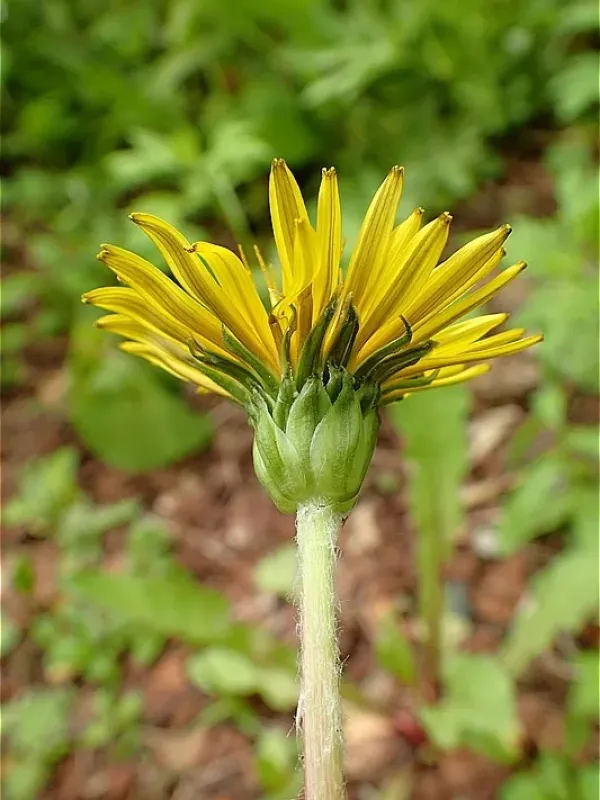
Description
Sowing dates
Hondo Dandelion, belonging to the Asteraceae family, is a perennial herbaceous plant well-adapted to temperate climates. Sowing is typically carried out in early spring when the soil temperature consistently reaches 10–12 degrees Celsius, ensuring optimal germination.
Seeds should be sown at a depth of no more than 1 centimeter, as their small size requires adequate light for successful emergence. Row spacing should be maintained at 30–40 centimeters to allow for efficient crop management and weeding.
In regions with milder winters, late autumn sowing is possible, allowing for the harvest of early spring foliage. It is crucial to maintain appropriate plant density to prevent competition for essential soil nutrients and water resources.
Preparation for planting involves deep plowing and thorough harrowing to achieve a fine, crumbly soil structure. Fields prone to perennial weeds require pre-sowing herbicide treatment a month before planting to ensure a clean growing environment.
Uniform seedlings emerge when soil moisture is kept constant for the first two weeks post-sowing. Regular monitoring of hydration levels is a critical success factor during the initial establishment stage of this agricultural crop.
Growing requirements
Taraxacum hondoense thrives in open, sunny fields, as shade negatively impacts the synthesis of active biological compounds in leaves and roots. This culture is highly photophilic and requires full exposure to sunlight throughout the day.
The plant prefers light loamy or sod-podzolic soils with a neutral pH. High soil acidity hinders root development and overall growth, so lime treatment may be necessary if the pH level drops below the optimal range.
This species displays high frost resistance, typical of Japanese flora, allowing it to survive harsh winters under snow cover. However, in snowless winters with extreme cold, some additional covering may be required to protect the root crowns.
Soil moisture should be maintained at 60–70% of field capacity. The plant does not tolerate waterlogging, so fields with high groundwater levels or poor drainage are unsuitable for industrial-scale cultivation.
Nitrogen-rich mineral fertilizers are recommended during the early vegetation phase to boost green mass production. Organic matter should be incorporated into the soil during autumn plowing to improve its physical and chemical properties.
Yield
The yield of Hondo Dandelion green mass depends heavily on the intensity of irrigation and nitrogen supplementation. With proper agronomic management, multiple harvests of fresh leaves can be obtained throughout a single growing season.
Root productivity reaches its peak at the end of the second year of growth, when the roots accumulate maximum concentrations of inulin and other vital compounds. Yields can reach up to 8 tons of dry weight per hectare under intensive care.
Plant density is a key driver of yield; a planting density of 200,000 to 250,000 plants per hectare is considered optimal. Regularly removing flower stalks redirects the plant's energy toward leaf development and root expansion.
The use of growth stimulants during the rosette formation phase can increase green mass output by 15–20 percent. These applications must be balanced to maintain high-quality chemical composition for pharmaceutical or culinary use.
A well-planned crop rotation, where Hondo Dandelion returns to the same field only after 4–5 years, prevents soil exhaustion and reduces the accumulation of specific soil-borne pathogens, ensuring long-term productivity.
Main diseases and pests
Hondo Dandelion is susceptible to powdery mildew, especially during humid periods with high temperature fluctuations. Proper aeration and maintaining appropriate plant spacing are the primary preventative measures against this fungal disease.
Pests like aphids and spider mites can cause significant damage to young leaves, reducing the quality of the harvested crop. Eco-friendly biological pesticides are recommended to protect the integrity of the plant material.
The root system may be damaged by wireworms, especially in fields recently converted from perennial grasses. Integrated pest management, including traps and rigorous weed control, is essential for maintaining crop health.
Rust is another potential threat, appearing as characteristic spots on leaves during mid-summer. Removing infected plants and applying copper-based fungicides can help contain the spread of fungal spores across the plantation.
A robust prevention strategy relies on strict health monitoring of the planting material. Ensuring that seeds are certified and free of pathogens minimizes the risk of epidemic outbreaks within the crop fields.
Harvesting
Harvesting leaves is conducted in dry weather by cutting them 3–5 centimeters above the soil surface. This technique preserves the growing point, allowing for rapid regeneration of fresh foliage for subsequent cuts.
Roots are harvested either in early spring, before active sap flow begins, or in late autumn, when the plant enters dormancy. This ensures the roots contain the highest levels of stored nutrients and medicinal components.
Post-harvest, roots must be cleaned of soil, washed in running water, and stripped of fine lateral rootlets. Efficient primary processing is vital to ensure the final product is clean and free of foreign debris.
Drying should occur in specialized facilities at temperatures not exceeding 45–50 degrees Celsius to preserve enzymes and vitamins. Overheating leads to the degradation of sensitive active compounds, reducing the product's market value.
The final product is stored in paper or fabric containers in dry, well-ventilated rooms. Proper storage conditions protect the raw material from moisture and pests, maintaining its quality for up to two years.