
Homogyne discolor
Homogyne discolor
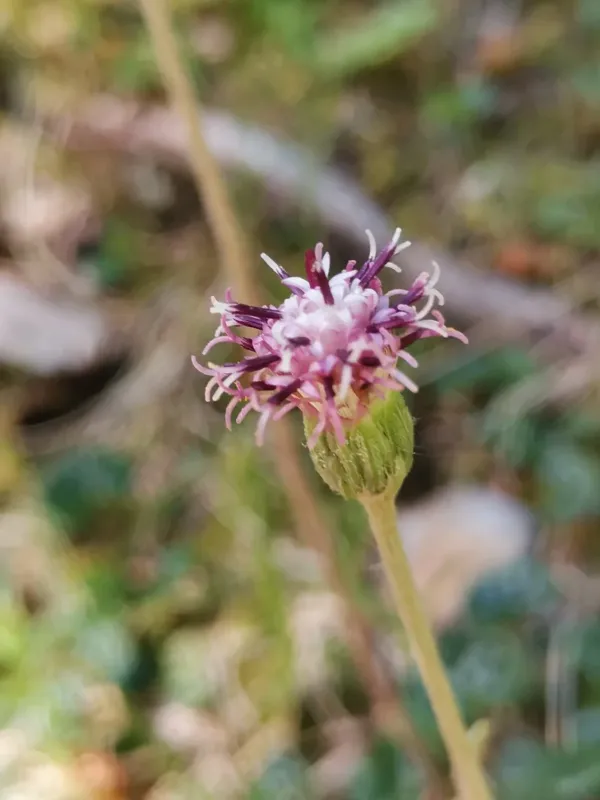
Description
Growing requirements
Homogyne discolor is a perennial herbaceous plant belonging to the Asteraceae family. Known for its distinct foliage, it is native to the mountain ranges of Central and Southern Europe, where it thrives in rocky, high-altitude environments often on calcareous soil bases.
The defining botanical characteristic of the species is the foliage, which exhibits a significant color contrast. The upper leaf surface is dark green and often shiny, while the underside features a dense, whitish, felt-like indumentum that serves as a protective mechanism against extreme weather conditions.
To cultivate Homogyne discolor successfully, gardeners must prioritize drainage. The soil should be gritty, mineral-rich, and neutral to slightly alkaline. Planting in heavy clay or waterlogged areas will almost certainly result in crown rot and the loss of the specimen within a single season.
Regarding climatic requirements, the plant prefers cool, temperate conditions with high levels of atmospheric humidity. In warmer climates, it should be situated in a north-facing position or under the dappled shade of larger shrubs to avoid the stress caused by intense afternoon solar radiation.
While not a major commercial crop, the plant holds significant value in specialized horticulture and landscape design. It is highly sought after by rock garden enthusiasts for its ability to form neat, stable mats of foliage that provide visual interest throughout the growing season.