
Skeletonweed
Chondrilla juncea L.
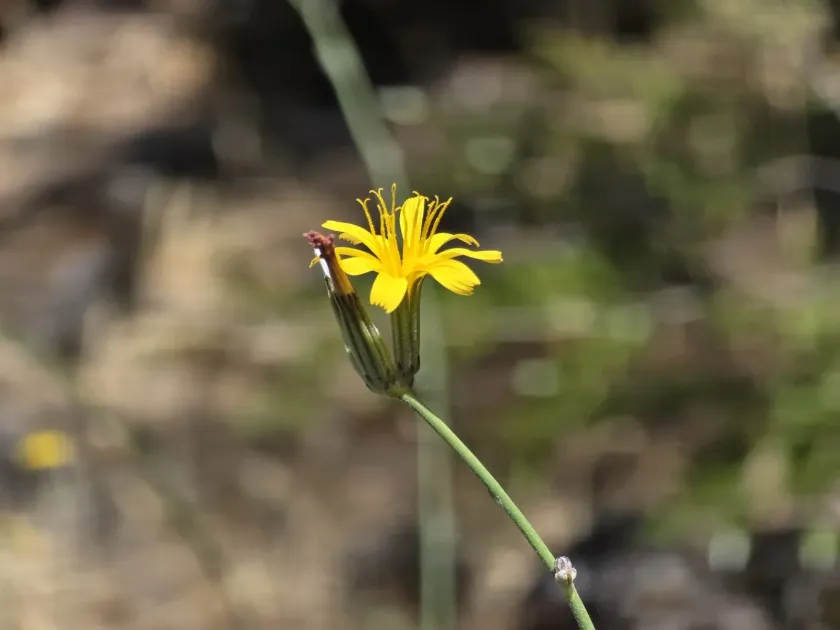
Description
Growing requirements
Chondrilla juncea, commonly known as skeletonweed, is a perennial herbaceous plant belonging to the Asteraceae family. It is widely recognized as a problematic weed in agriculture, although it has historically been researched for its latex content.
Native to Eurasia and North Africa, it has successfully colonized vast regions across the world. It thrives in well-drained, sandy, or disturbed soils, often becoming dominant in areas where other vegetation struggles to survive due to arid conditions.
The plant is biologically defined by its highly branched, wiry stems and a deep taproot system. The leaves are typically basal and wither early in the season, leaving the stem to perform most of the photosynthesis, which gives it a skeleton-like appearance.
It requires full sun exposure and is highly resistant to drought. Its ability to extract water from deep soil layers provides a significant competitive advantage over crop species in dryland farming systems.
Soil structure is critical for this species; it prefers light-textured soils where its root system can easily penetrate to great depths. It typically avoids waterlogged or highly competitive dense grasslands.
Main diseases and pests
One of the most effective biological agents for managing skeletonweed is the rust fungus Puccinia chondrillina. This pathogen specifically targets the plant, causing significant stress and reducing its reproductive capacity.
Various insects, such as aphids and gall mites, are known to feed on skeletonweed. While they can damage the plant, they rarely provide complete eradication due to the plant's robust regenerative capacity from its root fragments.
In terms of agricultural impact, skeletonweed competes intensely for moisture and soil nutrients. Mechanical control methods like tilling can be counterproductive, as root segments can sprout and form new plants, potentially worsening the infestation.
Chemical control involving systemic herbicides is standard in many farming practices. Successful application requires timing treatments to coincide with the rosette stage, ensuring that the chemical is translocated down into the roots.
Cultural control strategies, such as competition through cover crops and dense crop planting, are essential. By limiting light availability at the soil surface, farmers can effectively suppress the growth of this light-dependent weed.