
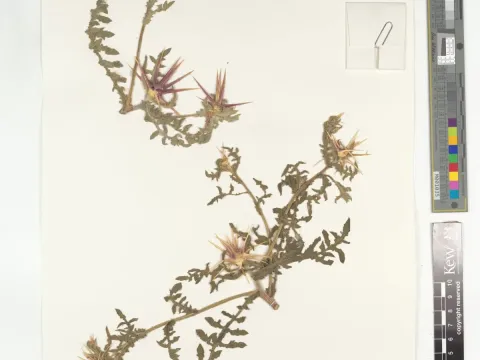
Alexandrian knapweed
Centaurea alexandrina
Alexandrian knapweed (Centaurea alexandrina) is a perennial herbaceous plant belonging to the large Asteraceae family. Native to the arid regions of North Africa, this species is perfectly adapted to desert and semi-desert conditions with high thermal regimes.
What the section contains
Alexandrian knapweed
For successful cultivation, the crop requires light, well-drained soils, preferably sandy or loamy-sand textures. One of its most notable botanical advantages is its significant tolerance to saline soils, which allows it to thrive in areas unsuitable for many other crops.
As a heliophyte, this plant requires maximum exposure to direct sunlight. Insufficient light results in poor physiological development and a decrease in the concentration of secondary metabolites, which are essential for its medicinal value.
The water requirements are minimal due to the plant's high drought resistance. In agricultural practice, irrigation should be strictly controlled, as excessive moisture often causes root decay and fungal infections.
Economically, the plant is valued for its specific secondary compounds, such as sesquiterpene lactones and flavonoids. The industry focuses on harvesting biomass for the extraction of bioactive components used in dermatological and anti-inflammatory drug production.
Fungal diseases are the primary threat to the crop, particularly powdery mildew and root rots, which emerge during periods of high humidity. Proper airflow and spacing between rows are critical to keeping the plants healthy.
Aphids are the most common pests, as they colonize the soft tissues of the plant during the early growth stages. Integrated pest management strategies are essential to protect the harvest without compromising quality.
Crop rotation serves as a key measure to prevent soil-borne pathogens from building up over subsequent seasons. Maintaining high agricultural hygiene reduces the need for chemical intervention.
Weed management is vital during the early vegetative phase, as competition for light and nutrients can significantly stunt the growth of the knapweed. Manual or light mechanical weeding is recommended.
If chemical pesticides are necessary, they must be applied with extreme caution. The end-use of this crop often mandates strictly organic or low-residue farming practices to meet industrial safety standards.