
Arborescent safflower
Carthamus arborescens
Description
Growing requirements
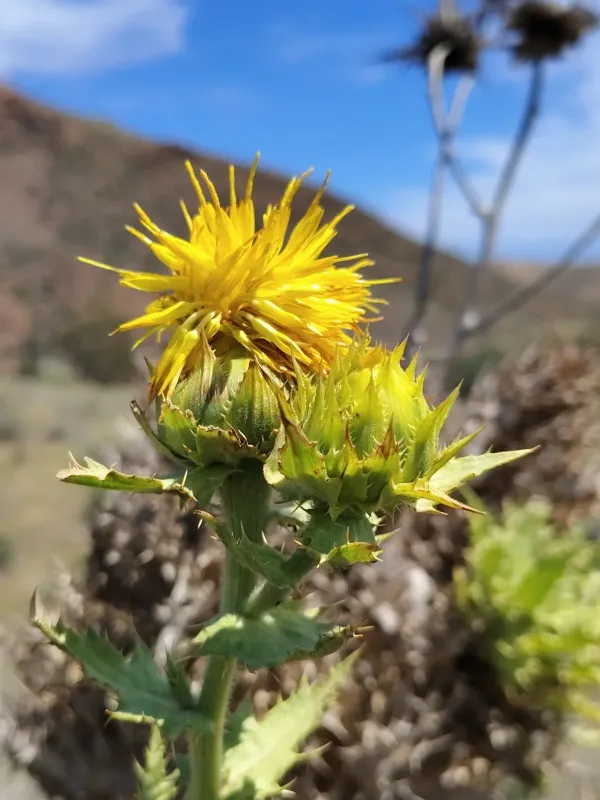
Arborescent safflower (Carthamus arborescens) is a perennial shrubby plant belonging to the Asteraceae family. It is distinct for its lignified stems and high tolerance to extreme arid conditions, making it a promising candidate for xerophytic agriculture in drought-stricken areas.
Native to the Western Mediterranean, including regions of Spain and North Africa, the species is perfectly adapted to environments with poor soil quality and scarce rainfall. Its biology focuses on resource conservation and efficient water uptake, which is a key trait for future climate-resilient farming.
Climate requirements involve long, hot, and dry summers, which are necessary for the maturation of its seeds and the development of high-quality plant compounds. It is highly intolerant to frost during the active growth phase and requires consistent, bright sunlight to thrive.
The plant grows best in rocky, alkaline, or sandy-loam soils with excellent drainage. It does not require high levels of nitrogen fertilization; in fact, excessive nutrients can lead to structural weakness and increased susceptibility to various pests, undermining its natural hardiness.
Cultivation techniques emphasize direct sowing in well-prepared seedbeds to ensure optimal germination. Once established, the crop is exceptionally self-sufficient, requiring little human intervention other than occasional weeding to minimize competition for moisture during the early seedling stages.
Main diseases and pests
The main pathological threats include root rot diseases caused by poor drainage and excessive watering. Maintaining a dry field environment is the most effective preventative measure against fungal outbreaks that can devastate an entire field.
Insect pests, specifically aphids and certain moth larvae, occasionally target the flower buds during development. Integrated pest management strategies that prioritize beneficial insects are recommended to keep damage levels below the economic threshold without damaging the local ecosystem.