
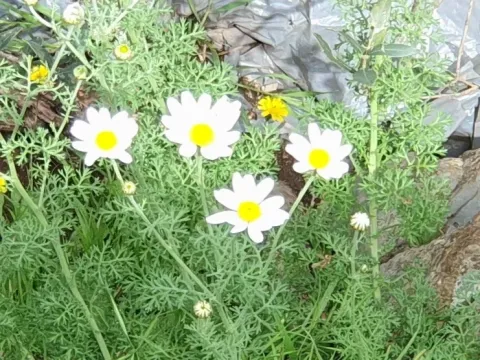
Anthemis punctata
Anthemis punctata
Anthemis punctata is a perennial herbaceous plant belonging to the Asteraceae family. Originating from the Mediterranean region and parts of North Africa, it has evolved to thrive in dry, rocky, and sun-drenched environments where other crops might struggle to survive.
What the section contains
Anthemis punctata
Botanically, this species is noted for its finely divided, glandular-punctate foliage which gives it a distinct appearance. The flowers form typical daisy-like heads with bright yellow discs and white ray florets, appearing in late spring to early summer depending on the altitude.
The crop demands excellent soil drainage. It performs best in poor, sandy, or stony soils with a neutral to slightly alkaline reaction. High levels of moisture or organic matter in the soil are often detrimental, leading to root rot and loss of essential oil quality.
Sunlight is the most critical factor for the development of Anthemis punctata. It requires full sun exposure to maximize the production of aromatic compounds and to prevent etiolation. It is highly drought-tolerant once established and does not require frequent irrigation.
Standard cultivation techniques focus on weed management during the seedling stage. Once the plants are established, they require minimal maintenance. Pruning after the main flowering flush can encourage secondary growth and keep the plant compact and productive for future seasons.
The primary threats to this species are fungal pathogens, specifically those causing powdery mildew and root rot. These are almost exclusively linked to poor drainage or high humidity, making site selection the most important factor in disease prevention.
Pests such as aphids and spider mites can colonize the foliage during hot and dry spells. While the plant is hardy, heavy infestations can reduce its vigor, necessitating the use of targeted insecticidal soaps or biological controls.
In humid areas, snails and slugs can cause significant damage to young shoots. Protecting the plants during their early development phases with natural barriers is a recommended practice to ensure successful establishment of the crop.
Verticillium wilt is another potential threat, especially in soils where previous crops have suffered from similar issues. Avoiding replanting in infected areas is crucial to maintaining a healthy and profitable cultivation cycle over several years.
Overall, keeping the plant in a high-ventilation, low-humidity environment is the best defense against all major biotic threats. Maintaining a healthy soil structure through proper cultivation practices is far more effective than relying on chemical intervention.