
Russian knapweed
Acroptilon repens (L.) DC.
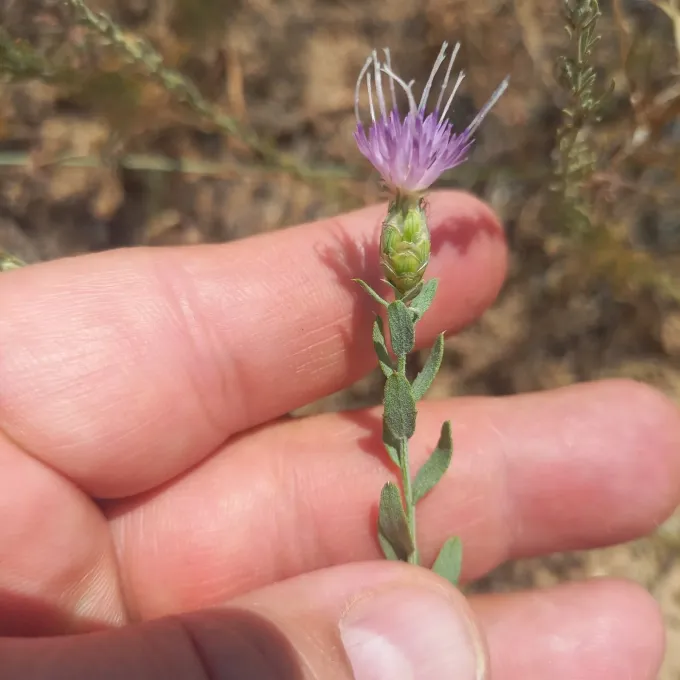
Description
Growing requirements
Russian knapweed, belonging to the Asteraceae family, is a deep-rooted perennial herb. It originates from Central Asia and has spread globally, becoming an aggressive invader in various agricultural environments.
The plant thrives in semi-arid and arid climates, showing remarkable tolerance to drought and soil salinity. Its root system can reach depths exceeding 10 meters, allowing it to compete effectively for water and nutrients.
It prefers well-drained, fertile soils but is highly adaptable to poor or disturbed sites. Because of its vigorous root growth, it can easily dominate pastures, rangelands, and crop fields if not managed aggressively.
Agronomic management requires a multi-year strategy involving deep plowing, competition by cover crops, and timely mowing to deplete root starch reserves. Success depends on the consistency of these treatments.
Chemical control focuses on the use of systemic herbicides applied at the late bud to flowering stage to ensure the translocation of the active ingredient down into the deepest parts of the root system.
Main diseases and pests
Russian knapweed is resistant to most common plant diseases due to its hardy nature and the presence of protective chemical compounds within its tissues that inhibit microbial attack.
There are no significant insect pests that target this weed effectively in commercial agricultural settings, which contributes to its status as a highly invasive and difficult-to-control species.
The most severe threat posed by this plant is its allelopathic property, where it releases chemicals into the soil that actively prevent other plants from germinating and growing in the vicinity.
This weed is toxic to horses and other equines, making infested pastures unsuitable for grazing. Livestock ingestion can lead to neurological disorders, which emphasizes the need for rigorous eradication.
Preventative measures are essential, such as using weed-free forage and seeds, as well as cleaning farming equipment to prevent the mechanical transport of root fragments that can sprout new colonies.