
Abyssinian picris
Picris abyssinica
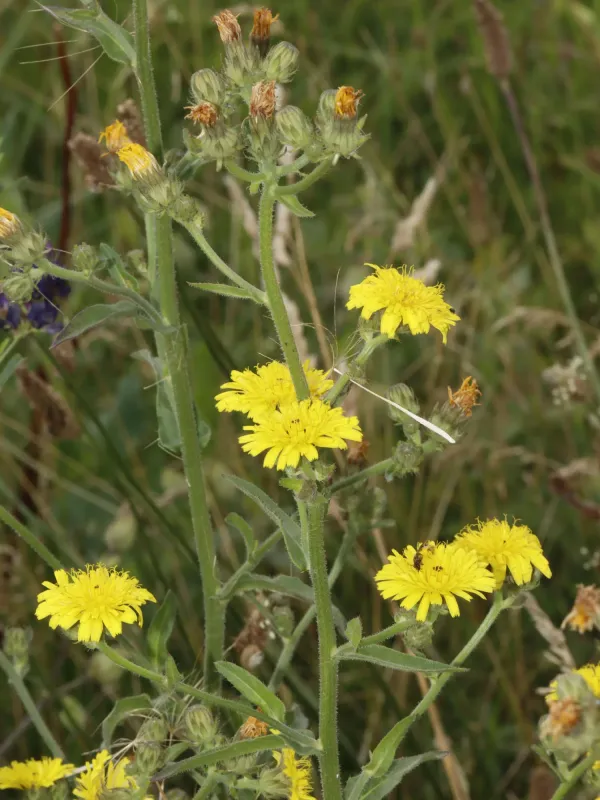
Description
Sowing dates
Abyssinian picris (Picris abyssinica) is a distinct member of the Asteraceae family that requires specific environmental conditions for successful establishment.
Sowing typically occurs in the early spring, ensuring that soil temperatures have consistently risen above 10 degrees Celsius to promote uniform germination.
Seeds should be sown at a shallow depth of approximately 1 to 2 centimeters to maximize light exposure, which is crucial for the germination of this species.
Row spacing should be calibrated to prevent excessive competition between individual plants while maximizing the total dry matter production per hectare.
After sowing, a light soil compaction step is recommended to improve seed-to-soil contact, which accelerates the initial development of the root system.
Growing requirements
This crop thrives in well-drained, sandy loam soils that prevent waterlogging and allow for deep root penetration during the early growth stages.
Abyssinian picris exhibits a high preference for sunny environments, as shade negatively impacts both the biomass accumulation and the nutrient profile of the leaves.
It is relatively resilient to dry spells, though supplemental irrigation during the most active growth phases significantly enhances yield and consistency.
Nutrient management should focus on balanced NPK applications, with an emphasis on potassium to support the plant's structural integrity and drought resistance.
The optimal pH range for this crop is between 6.0 and 7.5, ensuring that vital micronutrients remain bioavailable in the soil solution throughout the growing season.
Main diseases and pests
Like many species in the Asteraceae family, Abyssinian picris is susceptible to a range of fungal infections if humidity levels remain high for extended periods.
Powdery mildew represents a primary concern, appearing as a white fungal mat on the foliage and potentially reducing the photosynthetic output of the crop.
Insect pests, particularly aphids and certain lepidopteran larvae, can cause significant damage by feeding on young tissue, necessitating active monitoring.
Root-related issues, such as crown rot, are more frequent in poorly drained fields, highlighting the importance of soil structure management.
Integrated pest management strategies are advised, combining mechanical weed control with targeted biological applications to maintain crop health.
Harvesting
The harvest timing for forage purposes is strictly determined by the growth stage, specifically at the onset of budding to capture the highest nutritional value.
Mechanical harvesting should be executed during dry weather conditions to minimize moisture content in the cut material and reduce the risk of spoilage.
For seed production, harvesting is delayed until the seeds reach full maturity, requiring careful handling to prevent loss through natural shattering.
Post-harvest drying is essential to ensure that the moisture content is reduced to safe levels, preventing combustion and fungal contamination during storage.
Proper storage involves using clean, moisture-controlled facilities to maintain the quality of the harvested product for its intended use in livestock feeding.