
Aaronsohnia factorovskyi
Aaronsohnia factorovskyi
Description
Growing requirements
Aaronsohnia factorovskyi is an annual herbaceous plant belonging to the Asteraceae family. It is a highly specialized species adapted to the harsh conditions of desert and semi-desert environments.
The plant originates from the arid regions of the Middle East and North Africa. It is perfectly evolved for survival in stony deserts and wadis, utilizing limited moisture to complete its life cycle.
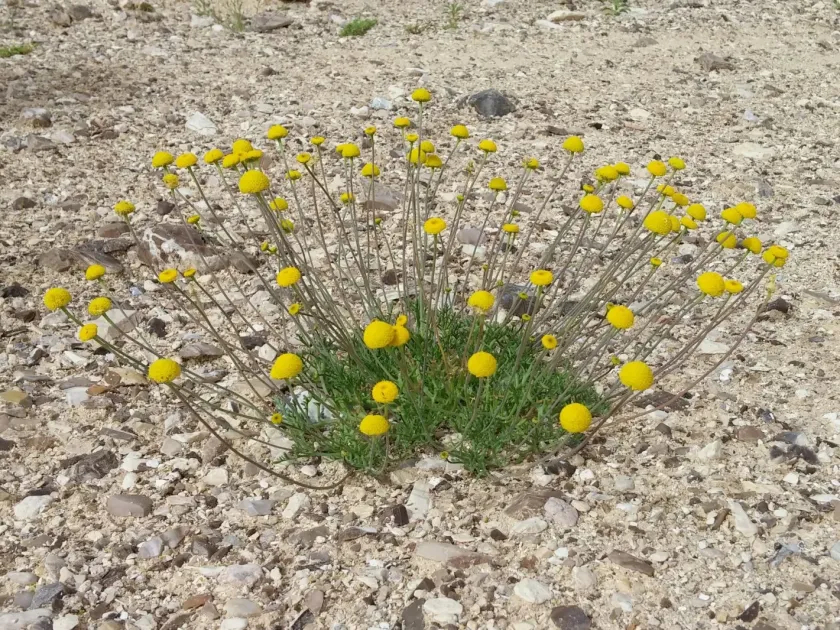
Botanically, it is characterized by finely dissected leaves and yellow flower heads. These structures are optimized to reflect intense sunlight and prevent water loss during periods of high temperature.
Cultivation of this species requires sandy or gravelly soils with excellent drainage. It thrives in high-light environments and is extremely intolerant of waterlogging or high soil humidity.
Economically, this plant is studied for its essential oil composition and its potential as an adaptive crop for sustainable agriculture in rapidly desertifying global regions.
Main diseases and pests
Root rot remains the most significant threat to Aaronsohnia factorovskyi when grown in agricultural settings, usually caused by improper soil moisture management.
The plant may be susceptible to localized desert insects such as grasshoppers, which thrive in its natural habitat and can cause significant foliage damage.
Fungal infections can develop if the spacing between plants is too small, reducing the natural airflow that is essential for maintaining the health of this desert-adapted species.
Management of pests and diseases relies heavily on preventative measures rather than chemical intervention to preserve the plant's natural chemical profile.
Maintaining a strict dry-farming approach or controlled drip irrigation is recommended to mitigate the risk of pathogen outbreaks common in more humid agricultural systems.