
Ginseng
Panax ginseng C.A. Mey.
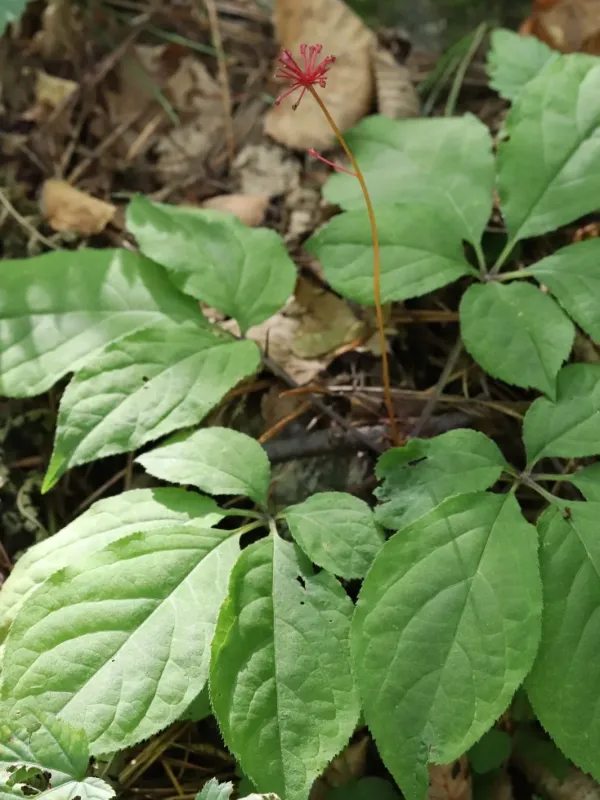
Description
Sowing dates
Ginseng (Panax ginseng C.A. Mey.) belongs to the Araliaceae family. It is a perennial herbaceous plant that is propagated in agriculture primarily through seeds.
Seeds are sown in the autumn, before winter, ensuring natural stratification in the soil throughout the cold season. It is vital to use only fresh, properly prepared seeds with high germination potential.
To accelerate the stratification process in industrial settings, seeds are often held in special substrates under alternating temperature regimes. This allows for quality control and more uniform germination in the spring.
The planting depth is typically 3–5 cm. It is crucial to ensure optimal soil moisture immediately after sowing to prevent the upper soil layer, where the seeds are located, from drying out.
The planting pattern must account for future maintenance, so wide-row methods or cultivation in special beds are typically used. This facilitates weeding and the application of necessary agronomic treatments.
Growing requirements
Ginseng is a highly demanding crop, reflecting its biology as a forest plant. It requires shaded areas, as direct sunlight is detrimental to its delicate leaves.
The optimal soil for ginseng is a loose, fertile forest loam with high organic content, excellent aeration, and drainage. Acidic or waterlogged soils cause rapid root system failure.
The crop has strict requirements for soil and air humidity. Maintaining a balance is critical: excess moisture leads to rot, while drought causes growth arrest and loss of root quality.
In its native range (the Far East, Northeast China, Korea), ginseng grows in deciduous forests, so cultivation must simulate these conditions using artificial shading structures.
Temperature must be moderate. Sharp fluctuations and late spring frosts require protection of the plantations, often achieved through specialized netting or slat construction.
Yield
Ginseng cultivation focuses on harvesting the medicinal root, which accumulates biologically active compounds called ginsenosides. Root mass depends directly on the age of the plant and the quality of care.
The industrial growing cycle of ginseng lasts from 5 to 7 years. Before this time, the root does not develop the required medicinal properties or market weight, making it a long-term agricultural investment.
Yield is measured in kilograms of dry or raw root per unit area. Average metrics vary significantly based on adherence to agronomic technology and planting density.
The quality of the harvest is assessed by physical root parameters: weight, shape, absence of damage, and the concentration of specific active compounds. Large, branched roots are valued significantly higher.
In addition to roots, leaves and berries of the ginseng plant are used in some countries to produce dietary supplements, teas, and cosmetics, which increases the overall profitability of the crop.
Main diseases and pests
The main threats to ginseng plantations are fungal diseases that develop under conditions of high humidity and poor ventilation. The most dangerous are Alternaria blight and Fusarium wilt.
Root rots pose the greatest threat, as they target the underground part of the plant. If symptoms are detected, infected plants must be removed immediately, and fungicide treatment must be applied.
Pests such as wireworms, white grubs, and nematodes can cause significant damage to the root system. Control requires preventive measures, including soil disinfection before planting.
- Ensure proper soil drainage to prevent water stagnation.
- Maintain planting distances for effective air circulation.
- Perform regular phytosanitary monitoring of plantations throughout the growing season.
The use of chemical plant protection products must be strictly limited and regulated, as ginseng is a medicinal crop that can accumulate pesticide residues in its tissues.
Harvesting
Harvesting ginseng is a labor-intensive process requiring maximum caution. The root is very brittle, and any mechanical damage significantly lowers its market value.
Typically, harvesting is done at the end of the growing season when the above-ground part of the plant begins to wither. At this time, the roots concentrate the maximum amount of active compounds.
To extract the roots from the soil, specialized forks or equipment are used to carefully lift the soil layer without damaging the root system. The process is often performed manually on smaller plots.
After excavation, the roots are cleaned of soil, washed (without damaging the skin), and sorted by weight and appearance. It is unacceptable to leave the roots exposed to the sun for long after harvest.
Further processing includes drying, which is performed under controlled conditions, or preparing "red ginseng" through steaming followed by drying at specific temperatures.