
Wolffiella gladiata
Wolffiella gladiata
Description
Sowing dates
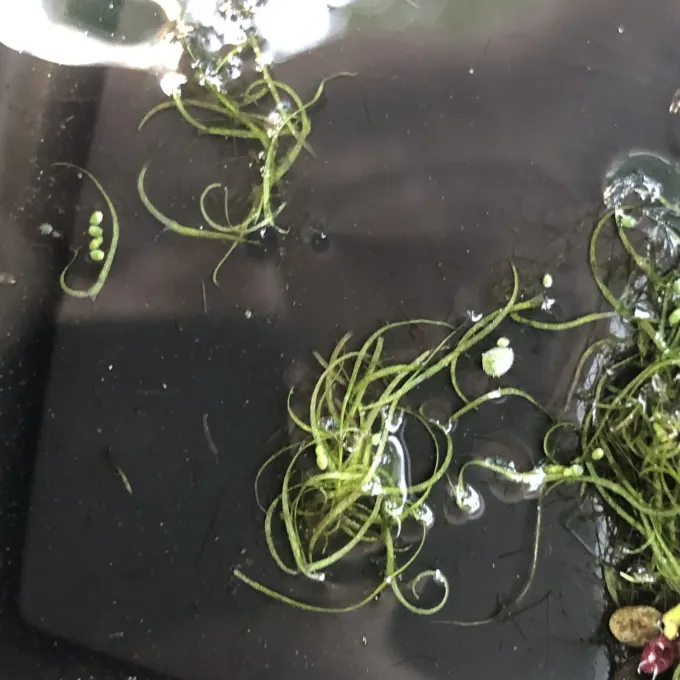
Wolffiella gladiata is a free-floating aquatic plant belonging to the Araceae family. Unlike conventional crops, it lacks a root system and thrives by absorbing nutrients directly from the water column.
Propagation is primarily vegetative, involving the division of thalli. Establishing a new crop involves introducing starter colonies into controlled aquatic environments during warmer months.
The planting density must be carefully managed; excessive clustering restricts light penetration and slows down the overall growth rate of the colony.
In industrial settings, nutrient-enriched water solutions are utilized to trigger rapid growth, with nitrogen and phosphorus levels being the primary variables.
Optimal growth is observed during long, sunny days, making this plant highly productive in greenhouse or outdoor pond systems during late spring and summer.
Growing requirements
Maintaining a stable water chemistry is essential for the healthy growth of Wolffiella gladiata, with a preferred pH range between 6.5 and 7.5.
The plant demonstrates the best physiological activity in water temperatures ranging from 22 to 28 degrees Celsius, which is optimal for metabolic efficiency.
Still or slow-moving water is a key requirement, as high-velocity currents can physically disrupt the delicate, flat structure of the thalli.
Adequate light intensity is necessary for photosynthesis; however, protection against extreme, direct solar radiation is often required to prevent plant bleaching.
Water cleanliness is vital to prevent the overgrowth of invasive algae species that compete for the same sunlight and dissolved mineral nutrients.
Yield
The yield of Wolffiella gladiata is characterized by rapid biomass doubling times, often increasing its total mass by 10-20 percent daily under ideal conditions.
Productivity is directly linked to the concentration of dissolved nutrients, making the plant an excellent candidate for nutrient recovery in aquaponic systems.
Mechanical harvesting via fine-mesh netting is the standard method for collecting the biomass from the surface of the ponds.
High protein content makes the harvested biomass an excellent supplemental feed ingredient for various aquaculture sectors and livestock industries.
Yield stability relies on consistent management of nutrient input and the regular removal of excess biomass to maintain a healthy growth cycle.
Main diseases and pests
Pathogenic fungi represent the most significant threat to plant health, often manifesting as rotting symptoms when water temperatures fluctuate excessively.
Insect larvae and certain aquatic pests can damage the colonies, leading to localized die-offs if not addressed through early biological monitoring.
Competition from other duckweed species or invasive algae can lead to a decline in crop quality and yield if the ponds are not regularly cleaned.
Environmental toxicity, particularly from heavy metals or herbicide runoff, is lethal to the crop, causing rapid senescence of the fronds.
A sudden drop in ambient temperature can induce a dormant state, causing the plant to lose its bright green pigmentation and halt biomass production.
Harvesting
Harvesting is performed frequently to ensure the colonies remain in their exponential growth phase without reaching overcrowding conditions.
The harvested product must be processed immediately, as the high water content makes the plant susceptible to rapid spoilage and fermentation.
Gentle low-temperature drying methods are employed to create shelf-stable protein powder while preserving the essential amino acid profile.
Integration with advanced processing equipment allows for the automated separation of the plants from the pond water during the collection stage.
Strategically timed harvests ensure the sustainability of the culture, leaving sufficient biomass in the pond to act as a seeding population for the next cycle.