
Wolffiella lingulata
Wolffiella lingulata
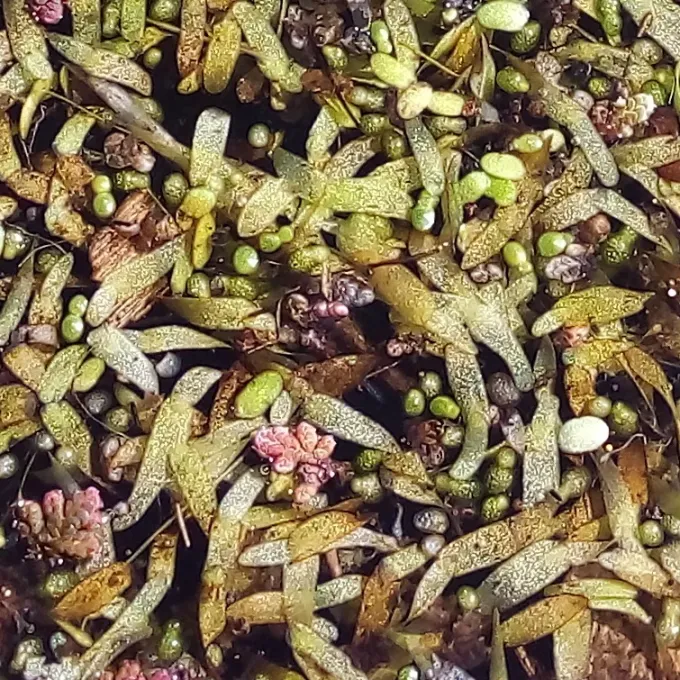
Description
Sowing dates
Wolffiella lingulata is propagated primarily through vegetative reproduction, specifically by the division of its flattened thalli. The introduction of the culture into a new water body involves spreading healthy, actively growing fronds across the surface.
The most favorable period for establishing the colony is during the late spring and summer months. Maintaining the water temperature between 20°C and 28°C is crucial for achieving the maximum rate of division and biomass accumulation.
For efficient colonization, an initial density of at least 50-100 grams of fresh biomass per square meter is recommended. Care should be taken to ensure an even distribution across the water surface to maximize photosynthetic efficiency.
In controlled environments such as greenhouses or bioreactors, supplemental CO2 and artificial lighting can significantly accelerate growth rates. Regular monitoring of the colony density is essential to prevent overcrowding and stunting.
When cultivating in open ponds, containment systems such as floating booms are often utilized to prevent the culture from being dispersed by currents or wind. This ensures the biomass remains concentrated for easier management and harvesting.
Growing requirements
This species belongs to the Araceae family (formerly Lemnaceae) and is considered one of the smallest and most structurally simple flowering plants. Its body consists solely of a thin, tongue-shaped thallus lacking true roots or stems.
Wolffiella lingulata has specific nutritional requirements, thriving in water rich in nitrogen and phosphorus. Nutrient availability directly dictates the plant's growth velocity and the protein content of the harvested biomass.
The plant prefers stagnant or very slow-moving water bodies with a pH range of 6.5 to 8.0. Extreme alkalinity or acidity can cause metabolic stress, leading to the rapid decay of the delicate green thalli.
While light is essential for its development, intense direct sunlight can induce bleaching and tissue damage. Partial shading or diffuse light is typically preferred to ensure steady and healthy growth throughout the day.
- Ideal Temperature: 22–26 °C.
- Nutrient Sensitivity: High demand for nitrogenous compounds.
- Light Requirement: 12–14 hours of moderate intensity.
- Water Quality: Low turbidity and absence of heavy metals.
Yield
The biological productivity of Wolffiella lingulata is remarkable due to its ability to double its population in just a few days. Under optimized conditions, this plant serves as a highly efficient producer of plant-based protein.
Yield is primarily governed by the balance of dissolved nutrients and light availability. Industrial aquaculture systems are now being researched to maximize these yields for potential use in livestock and fish feed industries.
Productivity is measured by the dry matter yield per unit area. Given its high nutrient density, the biomass is a valuable additive in aquaculture diets, helping to reduce the reliance on fishmeal.
Harvesting is performed through mechanical skimming or filtration systems that gently recover the floating plants. Regular harvests are necessary to keep the population in the rapid exponential growth phase.
Optimizing water quality and nutrient delivery ensures a consistent and stable annual harvest. Continuous management of these variables is key to achieving industrial-scale production goals for this species.
Main diseases and pests
The most significant threat to a healthy Wolffiella colony is the uncontrolled growth of phytoplankton or other algae. These organisms compete for light and mineral resources, often outcompeting the duckweed-like plants.
Various aquatic invertebrates and insect larvae can graze on the thalli, potentially reducing colony density. Furthermore, fungal pathogens can be an issue if the water quality deteriorates or if overcrowding causes poor circulation.
Signs of distress include discoloration, thinning of the thallus edges, and the appearance of necrotic spots. Immediate water turnover and the removal of affected biomass are necessary to stop the spread of infection.
Bacterial contamination can lead to rapid soft rot within the colony. Maintaining a strict sanitation protocol when introducing new material is the best defense against such biological threats.
Chemical control of pests is generally avoided as the plant is extremely sensitive to most herbicides and pesticides. Integrated biological management is preferred to maintain the ecological balance of the production system.
Harvesting
Harvesting typically occurs when the surface of the water body is completely covered. Using automated skimming equipment allows for large-scale recovery of the plants without damaging the delicate thalli structure.
Once harvested, the biomass must be thoroughly rinsed to remove organic debris and suspended particles. This preparation stage is vital to ensure the final product meets quality standards for animal or fish feed.
Drying is the final step, usually conducted at low temperatures (below 50°C) to preserve the integrity of proteins and essential vitamins. Proper drying prevents spoilage and extends the shelf life of the product.
The dried or processed biomass can be stored for extended periods, making it a reliable seasonal supplement. Proper packaging and cool storage conditions are recommended to maintain nutritional stability.
By tailoring the harvest frequency to the specific growth rate of the culture, producers can maximize output throughout the growing season, ensuring a constant supply of high-quality plant biomass.