
Saposhnikovia seseloides
Saposhnikovia seseloides (Hoffm.) Kitagawa.
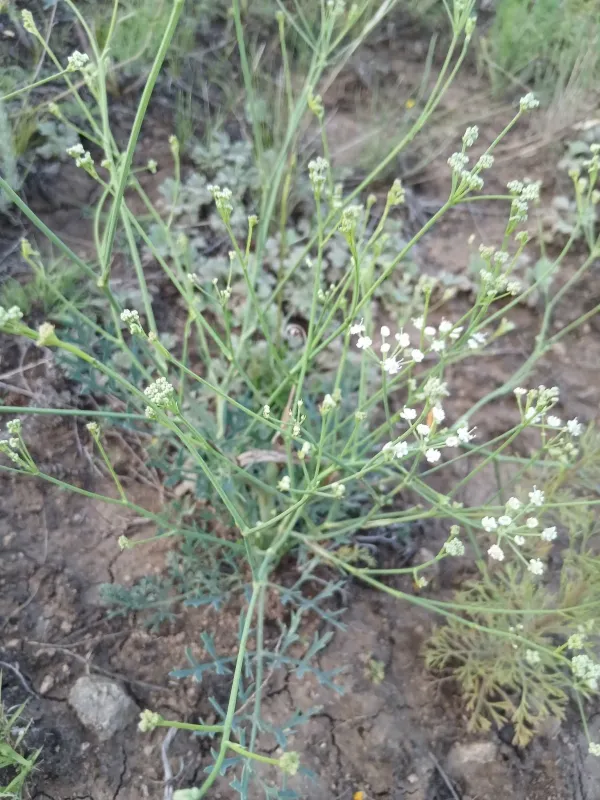
Description
Sowing dates
Saposhnikovia seseloides is a perennial herbaceous plant belonging to the Apiaceae family, highly valued in traditional medicine for its powerful root system. Propagation is strictly carried out through seeds, as vegetative methods are generally ineffective for commercial cultivation.
Seeds require a period of cold stratification to break dormancy and ensure high germination rates. In field conditions, sowing is performed either in late autumn for wintering or in early spring into well-prepared, loose soil at a depth of approximately 1-2 centimeters.
Industrial planting usually involves row spacing of 45 to 60 centimeters, which allows for mechanical weeding and proper aeration. The seeding rate is calibrated based on germination tests, typically requiring 2–3 kilograms of high-quality seeds per hectare.
During the first year, the plant demonstrates a relatively slow growth rate, focusing primarily on establishing a rosette of leaves and a strong taproot. Proper soil moisture management during this initial phase is essential to ensure the development of a vigorous root system.
Early-stage maintenance includes frequent weeding, as the seedlings are sensitive to competition from aggressive weeds. Thinning the seedlings to an appropriate distance allows each plant enough space to develop a high-quality root without deformation.
Growing requirements
This crop is recognized for its frost resistance, making it suitable for cultivation in temperate zones with cold winters. The optimal temperature for vegetative growth typically ranges from 18 to 22 degrees Celsius, avoiding extreme summer heat.
Saposhnikovia thrives in deep, loose, sandy loam or loamy soils. Good drainage is a fundamental requirement; the plant cannot tolerate waterlogged soils, which lead to rapid decay of the taproot and fungal infections.
The soil should be neutral to slightly alkaline, with a rich organic matter content. Because the plant develops a long, deep root, soil compaction must be avoided at all costs, as it limits the root's growth and decreases its commercial and medicinal value.
Fertilization should prioritize phosphorus and potassium to support root development, while nitrogen should be kept at moderate levels. Excessive nitrogen can lead to excessive foliage growth, which directs energy away from the storage root.
Full sun exposure is crucial for the optimal development of the plant's secondary metabolites. Shade or partial cover often results in weaker plants with lower levels of active compounds, which are vital for the pharmaceutical industry.
Yield
Yield significantly depends on the plant's maturity, as the concentration of active medicinal compounds peaks in 2-3-year-old plants. Growers can expect a harvest of approximately 1.5 to 2.5 tons of dried root mass per hectare.
Intensive farming practices, including irrigation during dry spells and proper nutrient management, can increase both the total yield and the percentage of high-grade roots. Maintaining optimal plant density is key to achieving consistent root size.
Root quality is often determined by its length and lack of branching. High-quality roots are typically straight and dense, indicating they were grown in well-tilled, rock-free soil with adequate moisture control throughout their development.
On average, a two-year-old plant produces a root weighing between 150 and 250 grams. By optimizing the growth environment, farmers can maximize the ratio of standard-size roots, which fetch higher prices in the raw material market.
The economic potential of this crop is driven by the high demand for medicinal roots. Proper harvest timing prevents the roots from becoming overly woody, which is a common issue if the plants are left in the ground beyond their prime age.
Main diseases and pests
The most significant threats to Saposhnikovia include root rots caused by pathogenic fungi such as Fusarium and Rhizoctonia. These diseases are particularly prevalent in poorly drained soils where moisture remains excessive for long periods.
Soil-dwelling pests like wireworms and cutworms pose a severe threat, as they feed on the root tissue and provide entry points for fungal infections. Managing these pests is vital for protecting the plant's medicinal integrity.
Crop rotation is the most effective management tool, as it prevents the buildup of soil-borne pathogens. Experts recommend a waiting period of at least 4 to 5 years before planting Saposhnikovia again in the same field.
Integrated Pest Management (IPM) should be applied to minimize the use of chemical pesticides, as the crop is destined for medical use. Preventive measures, such as selecting resistant cultivars and maintaining field hygiene, are preferred.
Regular field scouting is essential for identifying early signs of disease or pest infestation. Once an infestation is spotted, affected areas must be treated or cleared immediately to prevent the rapid spread of the problem throughout the plantation.
Harvesting
Harvesting usually occurs in late autumn, once the foliage has yellowed and withered. This signals that the plant has ceased active growth and that the active medicinal ingredients have been fully translocated into the roots.
Mechanical harvesting involves deep plowing to lift the roots from the soil without damaging them. Because the roots are deep, specialized harvesting equipment or deep-tillage plows are required to minimize broken pieces.
After excavation, the roots are thoroughly washed in clean, running water to remove soil. This process must be handled efficiently to prevent prolonged submersion, which could lead to the leaching of valuable water-soluble components.
The roots are then dried in controlled conditions, ideally in a shaded, well-ventilated area or in drying kilns at temperatures not exceeding 45 degrees Celsius. Overheating can degrade the plant's essential oils and chemical constituents.
Stored roots should be packed in breathable materials like burlap or paper sacks. Proper storage in a dry, dark, and cool environment is essential to preserve the pharmacological properties of the product until it reaches the buyer.