
Slender celery
Cyclospermum leptophyllum (Pers.) Sprague ex Britton & P. Wilson
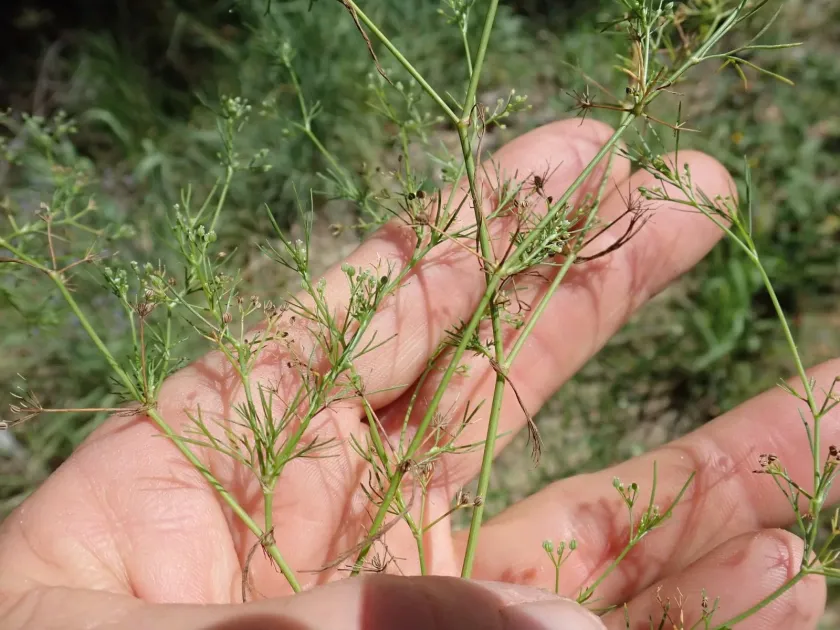
Description
Sowing dates
Slender celery (Cyclospermum leptophyllum) is a member of the Apiaceae family, native to tropical and subtropical regions of the Americas. It is a versatile plant, often grown as an annual, valued for its aromatic properties and fine, fern-like foliage.
Sowing should ideally occur in the spring, once soil temperatures remain consistently above 10-12 degrees Celsius. The seeds are very small and should be sown shallowly, ideally at a depth of no more than 1 cm to ensure proper germination.
For uniform stand establishment, maintain rows approximately 25-30 cm apart. This spacing is sufficient for aeration and helps to minimize the risk of fungal diseases during the vegetative growth stage.
The plant has a tendency to self-seed. In an agricultural setting, weed management is essential during the early stages of growth, as the young seedlings are slow to establish and can easily be outcompeted by more vigorous weeds.
Cultivation has spread globally due to the plant's adaptability. It performs best in temperate climates with mild summers, provided there is adequate moisture throughout the growing cycle.
Growing requirements
Slender celery requires well-drained, fertile soil with a neutral to slightly acidic pH. Waterlogging must be strictly avoided, as the roots are highly susceptible to rot when kept in saturated conditions for prolonged periods.
Light exposure is a critical factor for success. The plant thrives in full sun but can tolerate partial shade in hotter climates to prevent the foliage from becoming too coarse and losing its aromatic profile.
Temperature management is key to maintaining quality. The ideal growth temperature ranges between 18 and 24 degrees Celsius. Extreme heat or sudden frosts can trigger bolting, leading to a premature shift to the reproductive stage.
Consistent soil moisture is required for the best yields. Irrigation systems, such as drip lines, are recommended to provide steady moisture directly to the root zone without wetting the foliage excessively.
A balanced fertilization program, with an emphasis on nitrogen during the early growth phase, will support vigorous leaf production and higher market quality of the harvested biomass.
Yield
Yield estimation for slender celery is based on the weight of the fresh leaf biomass harvested before the onset of flowering. Multiple harvests can be achieved in a single season through frequent clipping.
Productivity is directly tied to soil fertility and the frequency of moisture application. Under intensive farming conditions, a substantial yield of high-quality aromatic greens can be produced consistently.
When grown for seeds, the plant is allowed to reach maturity. Its high seed production capacity makes it very efficient for growers who wish to save their own seed stock for subsequent seasons.
To maximize yields, growers should monitor for bolting. As soon as flower stalks begin to emerge, leaf growth slows down, and the quality of the herb decreases, signaling the end of the harvest window.
Marketable yields can be increased by implementing proper spacing and weeding strategies, which ensure that nutrients and water are allocated exclusively to the crop rather than competing vegetation.
Main diseases and pests
Like many members of the Apiaceae family, slender celery is prone to specific fungal pathogens. Powdery mildew and various leaf spot diseases are common, especially in humid or poorly ventilated environments.
Pests such as aphids and carrot rust flies can cause significant damage. Early identification and integrated pest management strategies are crucial to preserving the crop's health and visual quality.
- Powdery mildew
- Root rot
- Aphids
- Carrot rust fly
- Rust fungi
Crop rotation is the most effective preventative measure. Avoiding the planting of Apiaceae crops in the same area for at least three to four years helps to break the disease and pest cycles in the soil.
Biological controls, including predatory insects, are often effective at managing aphid populations. These sustainable methods help maintain the purity of the crop intended for culinary use.
Harvesting
Harvesting is typically performed in the early morning to ensure the leaves contain the highest concentration of essential oils, providing the best flavor and shelf life for the end consumer.
For fresh market use, the leaves are cut manually or with specialized machinery. Careful handling is necessary to prevent bruising and to maintain the delicate appearance of the foliage.
Post-harvest, the product should be cooled immediately. Maintaining a cool chain from the field to the point of sale is essential to prevent wilting and degradation of the volatile aromatic compounds.
If drying for herbal use, the foliage should be laid out in a thin layer in a shaded, well-ventilated area. Rapid, indirect drying helps retain the vibrant green color and intense aroma of the leaves.
Seed harvest begins when the umbrella-like flower heads start to turn brown. They are dried and threshed, then cleaned using airflow to remove chaff and ensure high-quality, pure seeds for the next crop.