
Thorowax
Bupleurum rotundifolium L.
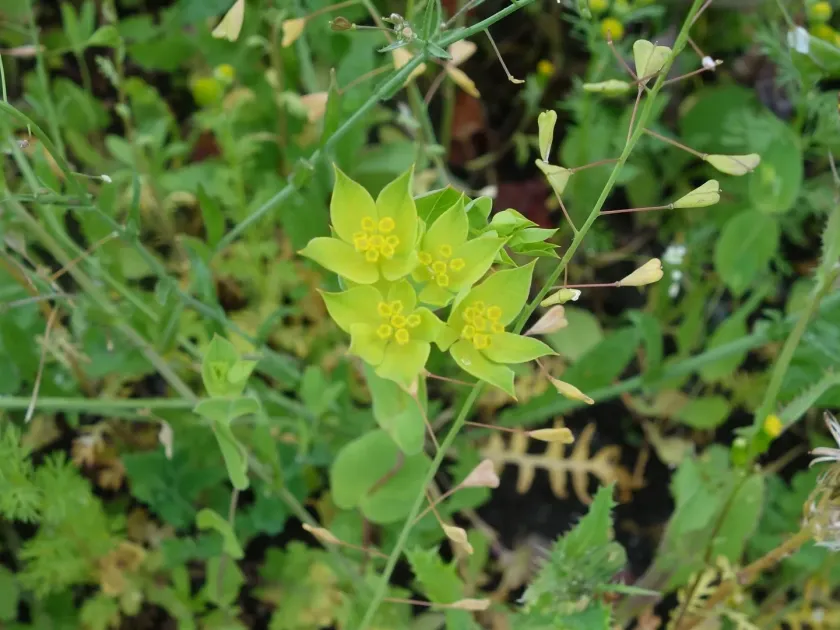
Description
Sowing dates
Bupleurum rotundifolium, commonly known as thorowax, is an annual herb of the Apiaceae family that requires careful attention during the early stages of its growth.
The seeds are typically sown in early spring as soon as the soil can be worked, as the plant prefers cool temperatures to initiate the germination process.
Row spacing should be maintained at 30–45 centimeters to ensure adequate space for the plants to spread and to facilitate mechanical weeding operations.
Seeds should be covered with about 1–2 centimeters of fine soil; deep planting can prevent emergence, leading to uneven crop density in the field.
It is recommended to use high-quality, stratified seeds to ensure a uniform emergence rate, which is crucial for achieving high-yield agricultural targets.
Growing requirements
This crop thrives in sunny locations with full exposure to daylight, which is essential for the accumulation of active compounds in its vegetative tissues.
The ideal soil is a light-textured, well-draining loam or sandy loam with a neutral pH, preventing the risk of waterlogging that causes root damage.
Water requirements are moderate, but consistent moisture is necessary during the vegetative phase to promote healthy stem and leaf development.
Bupleurum rotundifolium is sensitive to heavy, compacted soils, which can restrict root expansion and reduce the overall vigor of the plants.
Maintaining proper aeration is vital, as the root system of this species requires efficient gas exchange to prevent fungal outbreaks during rainy seasons.
Yield
Yields of dried herb can range between 1.2 to 1.8 tonnes per hectare, depending on soil fertility and the efficacy of the management practices applied.
Proper nitrogen management during the pre-flowering stage can significantly boost biomass, though excessive fertilization may dilute active constituents.
The timing of the harvest is the most significant factor impacting the yield of medicinal extractives, as the plant's chemistry changes during maturation.
Field maintenance, specifically timely removal of weeds, significantly impacts the final biomass yield by reducing nutrient competition in the initial weeks.
Achieving a high-quality yield involves standardizing the drying process to prevent oxidation of the plant's primary medicinal compounds.
Main diseases and pests
Powdery mildew represents a primary threat to leaf health, particularly in fields with low air circulation or during periods of high humidity.
Various insect pests, including aphids and specialized umbellifer-feeding larvae, can cause structural damage to the stems and developing flowers.
Integrated pest management (IPM) should be prioritized to control populations of insects without contaminating the product intended for pharmacological use.
Root rots are persistent threats in poorly drained areas, necessitating careful monitoring of irrigation levels and crop rotation schedules to avoid infestation.
- Powdery mildew
- Aphids
- Root rot
- Umbellifer moth larvae
Harvesting
Harvesting is ideally conducted during full bloom, as this phase corresponds to the peak concentration of bioactive components in the plant tissues.
The aerial parts are harvested by cutting the stems at a specific height, ensuring minimal soil contamination to maintain high quality standards.
Rapid transport to the processing facility is necessary to prevent the fermentation of fresh plant material, which can rapidly diminish its quality.
Drying is carried out in controlled environments at temperatures not exceeding 45 degrees Celsius to preserve the integrity of heat-sensitive chemicals.
Once dried, the product should be packed in light-proof and moisture-proof containers to maintain its shelf life and biological efficacy during storage.