
Bupleurum scorzonerifolium
Bupleurum scorzonerifolium Willd.
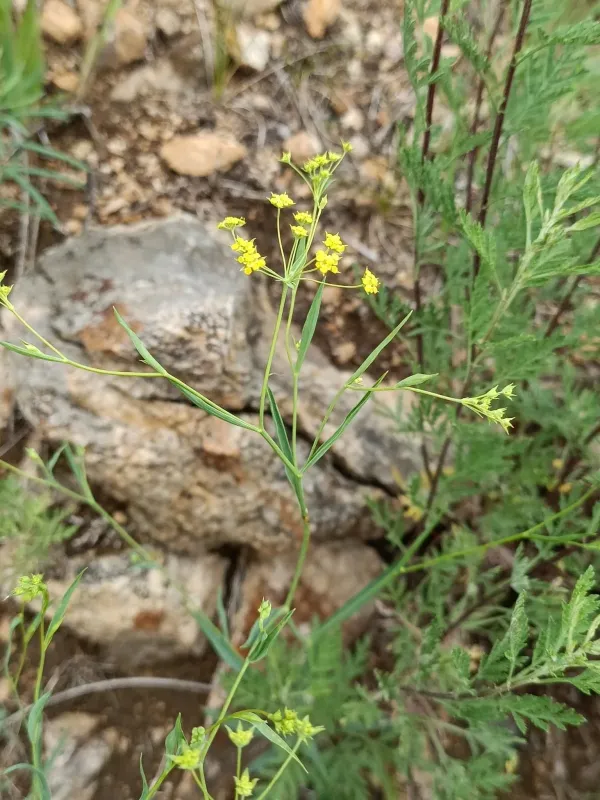
Description
Sowing dates
Bupleurum scorzonerifolium is a perennial herbaceous plant belonging to the Apiaceae family. For professional farming, seeds are typically sown in late autumn or early spring, provided they have undergone proper stratification to break dormancy.
When sowing in the spring, it is crucial to ensure seeds have experienced cold treatment, as they naturally exhibit a state of dormancy. Seeds should be planted at a shallow depth of 1–2 centimeters to ensure successful germination.
A row spacing of 45 to 60 centimeters is recommended for large-scale operations. This distance allows for efficient mechanical weeding and cultivation between rows throughout the growing season.
Seedlings emerge slowly, making weed control in the initial weeks a top priority. Preparing the soil beforehand and maintaining a clean field is essential to prevent weeds from suppressing the slow-developing plants.
Seed priming or soaking in growth promoters prior to sowing can significantly improve the uniformity of emergence. This practice helps the plants establish a stronger root system during their first year of growth.
Growing requirements
This species thrives in open, sun-drenched locations. Sufficient exposure to sunlight is a key factor in maximizing the concentration of therapeutic compounds in the plant's roots and foliage.
The ideal soil for this crop is well-drained, sandy loam or light loam with a neutral to slightly alkaline pH. Waterlogged soil is detrimental, as it encourages root rot and diminishes the quality of the harvested material.
The plant exhibits excellent cold tolerance, reflecting its natural habitat in the steppes of Eastern Asia. It is well-adapted to regions with harsh winters and fluctuating weather conditions.
An average ambient temperature of 18–25 degrees Celsius is optimal for vegetative growth. While drought-tolerant once established, providing adequate moisture during the initial growth stage is beneficial.
Applying balanced potassium and phosphorus fertilizers supports strong root development. Since the roots are the primary pharmaceutical component, optimizing soil nutrition is critical for high yields.
Yield
Economic productivity depends heavily on the age of the plantation. The harvest is typically most efficient from the third year onwards, as this is when the roots reach peak maturity and nutrient density.
Yields of dried roots generally range from 1.5 to 2 metric tons per hectare under intensive cultivation practices. Achieving these levels requires strict adherence to seasonal crop management guidelines.
The aerial part of the plant (herb) is harvested annually during the flowering stage. However, it is important to manage the frequency of harvests to ensure the root system is not exhausted and remains productive.
Consistent maintenance, including timely inter-row cultivation and fertilization, allows for stable output even in varying soil conditions. Careful monitoring of plant density is also essential for maximizing yield.
The optimal plant population density for commercial production is approximately 100,000 to 150,000 plants per hectare. This density provides sufficient individual space while ensuring high overall field productivity.
Main diseases and pests
The primary threats to this crop include fungal infections such as root rot, which are often exacerbated by poor drainage and excessive moisture. Proper irrigation management is the most effective preventative measure.
Pests such as aphids and specific beetle species can damage buds and leaves. Frequent field inspections are necessary to detect early infestations and implement eco-friendly management strategies.
Crop rotation is vital to prevent the accumulation of soil-borne pathogens. A gap of at least 4–5 years between successive plantings of this species on the same field is strongly advised to maintain soil health.
Weed management remains the most significant labor-intensive challenge. If left unchecked, weeds can easily outcompete the young seedlings in their first year of development, leading to significant crop losses.
Regular monitoring of field conditions, especially following heavy rains, is necessary to mitigate the risk of disease. Early intervention helps maintain the overall health and vigor of the plantation.
Harvesting
The harvest process is divided into two parts: collecting the foliage during the flowering season and digging up the roots during the dormant period, either in late autumn or early spring.
Roots should be carefully extracted using specialized equipment or forks to minimize mechanical damage. Once harvested, they should be cleaned quickly but gently, avoiding prolonged water immersion.
Drying is a critical stage. The material should be spread in shaded, well-ventilated areas or in temperature-controlled drying cabinets set below 50 degrees Celsius to preserve volatile chemical compounds.
Proper sorting and grading of the dried material are essential before storage. The final product should be stored in paper bags in a dry, dark, and cool environment to prevent degradation.
Properly dried and stored root material maintains its medicinal quality for up to three years. After this period, the efficacy of the active ingredients begins to decline, requiring regular stock rotation.