
Andreaea
Andreaea
The genus Andreaea, commonly known as granite moss or rock moss, belongs to the family Andreaeaceae. These bryophytes are not agricultural crops, but rather specialized wild plants that serve as pioneering species in extreme mountainous and polar environments across the globe.
What the section contains
 Andreaea alpestris
Andreaea alpestris
Andreaea alpestris
 Andreaea alpina
Andreaea alpina
Andreaea alpina
 Andreaea blyttii
Andreaea blyttii
Andreaea blyttii
 Andreaea frigida
Andreaea frigida
Andreaea frigida
 Andreaea megistospora
Andreaea megistospora
Andreaea megistospora
 Andreaea mutabilis
Andreaea mutabilis
Andreaea mutabilis
 Andreaea nivalis
Andreaea nivalis
Andreaea nivalis
 Andreaea rothii
Andreaea rothii
Andreaea rothii
 Andreaea rupestris
Andreaea sinuosa
Andreaea sinuosa
Andreaea rupestris
Andreaea rupestris
Andreaea sinuosa
Andreaea sinuosa
Andreaea
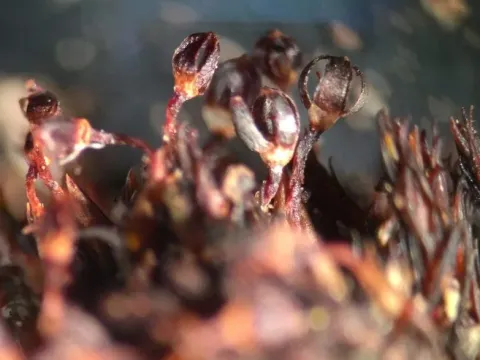
Morphologically, Andreaea is defined by its dark, often blackish coloration and a unique capsule that opens through four longitudinal slits. This mechanism is highly adapted for spore dispersal in windy environments, which is crucial for colonization on barren rock surfaces where these plants are typically found.
The distribution of this genus spans from the high Arctic and Antarctica to various alpine regions globally. They thrive on acidic rock faces, displaying a remarkable ability to survive both intense sub-zero temperatures and periods of extreme desiccation that would prove lethal to most other plant life.
Regarding ecological requirements, these mosses need bare stone substrates to anchor their rhizoids. They rely heavily on atmospheric moisture, such as fog and melting snow, rather than soil nutrient content. They are extremely sensitive to air pollution and habitat disturbance, functioning effectively as bioindicators of environmental health.
While there is no commercial farming or harvest associated with Andreaea, their ecological contribution is significant. They assist in the mechanical weathering of rocky terrain and participate in the early stages of soil formation, gradually preparing the site for more complex plant communities to inhabit over time.