
Andreaea blyttii
Andreaea blyttii
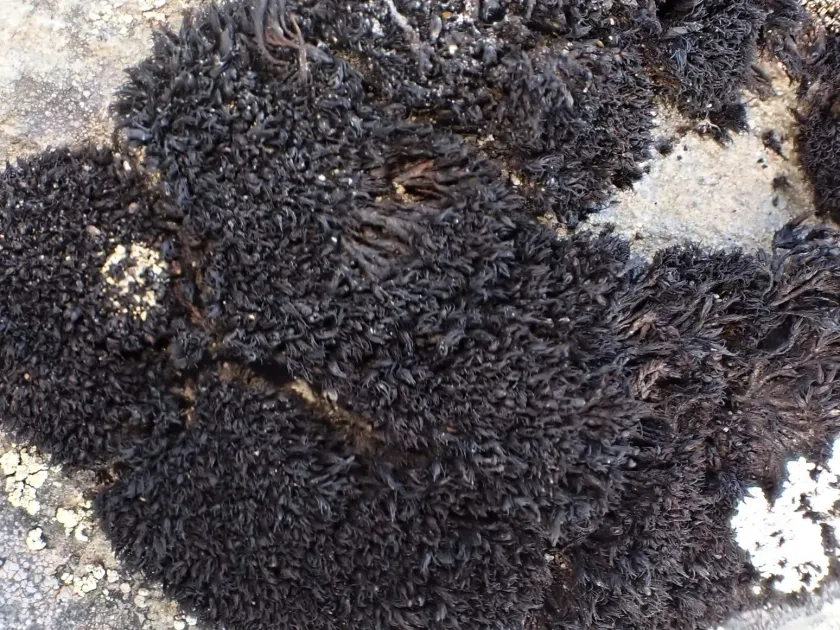
Description
Growing requirements
Andreaea blyttii is a unique species of moss belonging to the family Andreaeaceae. It is important to note that this organism is not an agricultural crop; it is a wild-growing bryophyte that thrives in extreme environments and holds no value for human commercial cultivation.
The distribution of this species is primarily focused on arctic and alpine regions. It grows exclusively on siliceous rock surfaces, often found in crevices or on damp slopes where moisture remains consistent throughout the short growing season typical of high-altitude ecosystems.
Botanically, the plant forms dark brown or blackish cushions. This pigmentation is a critical evolutionary adaptation, allowing the moss to maximize heat absorption from solar radiation in cold climates where temperatures often hover near freezing point for most of the year.
Regarding its ecological requirements, the species demands high air quality and consistent humidity. It is extremely sensitive to atmospheric pollutants and environmental degradation, which classifies it as a sensitive bioindicator for monitoring the health of high-mountain habitats.
The life cycle of this moss is strictly tied to the geological stability of its habitat. It propagates through spores, which require specific micro-topographic conditions to germinate and successfully establish new colonies on barren rock surfaces, making it impossible to integrate into any farming systems.